
J. J. Baloch
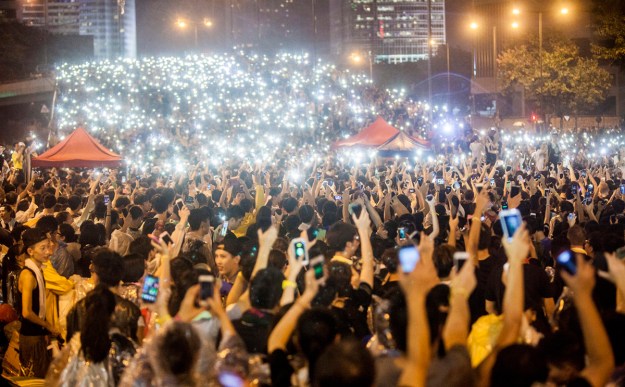
‘Demos’ (people) grow demons in the age of digital communications. Among all the freedoms, freedom to express one’s point of view play big in infusing soul in what we have come to understand a democratic system. Modern political thought believes that democracy is the only system that recognises human ability to rule himself or herself.
Nothing claims a better mechanism for the expression of one’s will and opinion than the social media networks i.e. Facebook, Twitter, Whatsapp, Snapchat, Google, YouTube, and similar other networks do! The social media offers greater access to the people and evokes a quick response of the state in times when the common man finds himself in the state of emergency whether natural or man-made.
The technology claims to have made greater inroads in the public sphere, causing a remarkable social and political change. The spinal cord of technology in moulding and welding socio-political equations has been its power of public connectivity from the platforms of social networks. In many cases, the connectivity of this type has the ability to escape governmental interventions and controls also. It has grown a technology beyond borders.
Many political analysts see this phenomenon of social connectivity as a catalyst for political change and hence many political parties worldwide work exclusively on such free networks to organise their propaganda, publicity, promotions, and electioneering, making minds and changing opinions in their own favours.
Clay Shirky, a scholar of the technology of socio-political change writes in the January, February issue of Science and Technology Magazine in these words, “As the communications landscape gets denser, more complex, and more participatory, the networked population is gaining greater access to information, more opportunities to engage in public speech, and an enhanced ability to undertake collective action.” In the political arena, these increased freedoms can help loosely coordinated public’s demand change.
In recent history, many countries have witnessed a remarkable rise of social media communications which significantly painted change in the political arena of those countries. These much debated scenarios of people going social and free on expressing themselves and getting together under one point of view have made very vibrant appearances since the beginning of 21st century from Manila Philippines 2001 removing the corrupt President Joseph Estrada of Philippine by gathering millions of people at Epifanio de Los Santos Avenue of Manila city a major crossroads in Manila through forwarded text messages reading, “Go to Estrada. Wear black.” This was the first political change caused by social media connecting the people. Removed president of Philippine himself admitted the power of text messages by calling demonstrators as the “generation of text-messaging.

This was followed by many similar incidents of text messages, writing the political change in many parts of the world. The examples of such significant political changes and influences include: The Arab springs in many Arabian countries of Middle East as well as North Africa in 2011, Obama presidential campaigns in 2008 and 2012, Trump’s miraculous winning of presidential elections 2016, Erdogan’s protection of Turkish democracy against bloody military coup by mobilizing masses through social media (Emo Call) in 2016, public agitations against their political leaderships in many Iceland, United Kingdom, Pakistan, India, and many other countries after Panama corruption scandal dictating resignations in many cases, and trump’s Muslim ban. There have been many more examples of how social media dictates political change.
Political scientists, as well as the media experts, are exploring the relationship between the social media opinion generation, community engagement and political change by conducting many surveys and studies in voting patterns, canvassing mechanisms, electioneering, public outreach and the time people spend on social media for connectivity, news, and political participation. Many academic types of research confirm that “people who consume more news media have a greater probability of being civically and politically engaged across a variety of measures. In an era when the public’s time and attention are increasingly directed toward platforms such as Facebook and Twitter, scholars are seeking to evaluate the still-emerging relationship between social media use and public engagement.”
From 2008 to 2013, more than thirty surveys and research studies have been carried out both by media experts and the academicians who have highlighted many facts about the increasing role of social media in political change. The key findings highlights of these studies include: First, different studies using different methods including random sampling of young populations both in developed and developing countries have found the 82% people who participated in surveys expressed the positive relationship between the use of social media with civic and political engagement. Secondly, in comparison to civic engagement, the correlation between social media use and electioneering process is weaker. Thirdly, “Measuring participation as protest activities are more likely to produce a positive effect, but the coefficients are not more likely to be statistically significant compared to other measures of participation.” Fourthly, “Social media plays a positive role in citizens’ participation.” Fifthly, however, studies do not seem to be sure about the revolutionary and transformative potential of social media platforms due to the anonymity and non-verifiability of content generation sources.
“Popular discourse has focused on the use of social media by the Obama campaigns,” Boulogne concludes. “While these campaigns may have revolutionised aspects of election campaigning online, such as gathering donations, the metadata provide little evidence that the social media aspects of the campaigns were successful in changing people’s levels of participation. In other words, the greater use of social media did not affect people’s likelihood of voting or participating in the campaign.”
Pakistan’s political landscape has begun to allow the space to social media interventions in building opinions. That is why many political scientists in Pakistan describe our democracy as “Twittery Democracy” in the wake of PTIs extensive Twitter campaigns. Politics in Pakistan will face many Twittery onslaughts in times to come. Political parties and political leaders can make their mark on public opinion to a great extent if they master the use of social media for canvassing and community engagement through personal, fast and affordable communications with the people of Pakistan.
The writer is a public policy analyst.

 Vision-Vista of JJ Baloch