
J. J. BALOCH
Policing future societies appears to be the taxing one because it is to deal with the dark power phenomenon in the society. From conventional crimes to terrorism and its multiple forms ranging from cyber to biological, postmodern police have to be scientific and high-tech; cops have to discover innovative strategies and policing technologies and have to resolve the issues of controversies surrounding the application of such technologies in terms of civil liberties.
“Furthermore, police chiefs should approach controversial strategies not merely as a process of educating the public about the police department’s point of view, but also as a genuine effort to obtain community input, keep an open mind, and try to ensure that police strategy have public support”.
For example, predictive policing is sometimes misinterpreted as a strategy that could target individuals before they have committed a crime. “Law enforcement should pay attention to the diversity of things that get called predictive policing,” explained University of California-Los Angeles (UCLA) Professor Jeffrey Brantingham. “We need to be specific about what we are talking about when we use the term” when we apply it to prevent crimes before they take place.
The issues which are likely to receive public attention in the future relate to the use of technology as a law enforcement tool. The authors of tech and gear, a blog, refer to many technologies, mostly relating to video tapping by the police, which could cause legal disasters and need to be used with great care and caution.
Similar is true for police use of discretion and force while dealing with public issues. In recent years, modern societies have witnessed the rapid growth of terrorist organisations and their use of technology in crime. As a result, many democracies have gone for new anti-terrorism legislation giving more powers of stop and search to police departments of many countries and have sanctioned the establishment of special courts for the trial of the cases of terrorism. The use of unbridled powers by the police for preventing terror has, in many cases, promoted it.
As a result, target attacks on police officers especially in Pakistan have become a serious concern for police departments. From Karachi to Quetta many police officers have lost their lives in targeted attacks by terrorist’s organisation mainly Da’aish or Islamic state. The terrorists have spared no place including police stations and training institutions. This trend of killing police officers, many fear, is likely to gain momentum in future when 17000 people of alleged and suspected Pakistani origin who have reportedly gone missing to fight in Syria, Iraq, and Afghanistan for ISIS and Taliban will return back once the war there gets slower or over. As a result of the recent rise in anti-police sentiment, cops need to stay vigilant now more than ever before and be prepared for targeted attacks.
In an environment charged with threats, replica firearms are a real danger to both police and the public at large. They have been at the centre of a number of high-profile officer-involved shootings, close calls, street crimes, robberies and lockdowns. Even with the passing of laws intended to address the issue, incidents continue to occur in urban centres like Karachi and Lahore at an all-too-frequent rate. This issue gets seriously complicated for police officers when people of Pakistan begin using explosives (pataka) on celebrations like Independence Day, defence day, annual days of celebrations (Eid) sporting events, and important religious days of different sects. This is dangerous because little children get injured very often. This needs the serious attention of the police.
In order to ensure transparency and accountability, police departments are going for certain technological devices to make them a permanent feature of their daily routines. In this regard, the importance of body cams has increased to a great extent especially in misconduct investigations. Camera and videotape is a better defence for a cop than his or her gun. Gun saves us against the criminals but body cams from the public which in Pakistan is very problematic and negative about police, and hence always in quest of finding faults with the police and fix them through exaggerated complaints very often. Besides body cams, police departments in UK, USA, Canada and many other countries are thinking the use of drones in the police. Some have also begun.
“As the use of video as a rebuttal to claims of officer misconduct continues to grow, it’s becoming more and more apparent that a camera (or cameras) can be the most vital tool a cop can have on patrol and present video evidence as a counter to serious allegations”.
Likewise, the use of Apps in policing is likely to increase. In our increasingly connected digital age, criminals are much more likely to leave a trail than ever before. The cops are now finding new avenues – such as Spotify and Instagram – to crack their cases and make arrests. Social media is emerging a new avenue for collecting of evidence, connecting with communities, gathering open source intelligence, and tracing the blind cases as our Islamabad police did in many such cases including that of Haji Razaque murder case in a guest house in Islamabad.
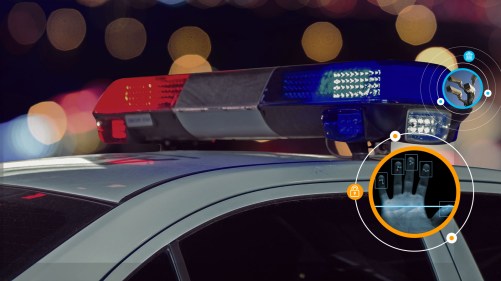
Police departments have achieved these goals in large part by deploying an endless array of new strategies and new technologies, such as: Community policing, Problem-oriented policing, Comp-Stat, Hot spots policing, Crime mapping, Predictive analytics, Intelligence-led policing, Closed-circuit video cameras, dash cams, and body cameras, Automated license plate readers, Gunshot detection systems, Wireless transmission of nearly any type of data imaginable, GPS devices to track suspects, Sharing of information, Regional task forces to address gun crime, drug crime, and other issues, Partnerships with the community, the private sector, and corporations/businesses, and Social media.
Another very interesting trend in making is avoidance of using force even when it is required by law to use. There have been several incidents in recent months during which we have seen cops succumb to what we have come to call ‘deadly hesitation’ — failing to do what is necessary to save themselves from potentially fatal injuries. They are unnecessarily putting themselves in danger for fear of what may happen after the incident. Islamabad police during dharnas have observed very careful restraint to use force to their own peril but those who used it unplanned got under fire in model town case Lahore and those who failed to do in Benazir murder case get 17 years imprisonment sentence. Many have lost jobs and others got to jail and rest is very ambivalent.
Today, police departments are far more complex than they were a generation or two ago. They still respond to calls for service, and they still investigate crimes, but that is where the similarities end. At the most fundamental level, police have expanded their mission, taking on the goal of preventing crime and reducing crime rates, rather than merely responding after crimes are committed. Today’s best police departments are always looking for ways to be proactive instead of reactive.
There is no doubt that this overall trend—police agencies expanding their mission and using new strategies and technologies in a proactive way to achieve success—will continue. In fact, the trend almost certainly will accelerate in coming years.
It is difficult to predict the exact outcomes of all these changes because the field of policing is just beginning to scratch the surface of what is possible. And there are major unknown factors always involved in policing. For example, the vast network of cameras in most cities and towns, combined with advances in facial recognition software and license plate readers, could eventually make it almost impossible for wanted criminals to “hide in plain sight.” In fact, there are existing examples of terrorist suspects being quickly identified and apprehended because their images were captured by video cameras. This example of Charring Cross Lahore investigations is well known in which a facilitator has been identified through CCTV footage.

However, there are many things the police department and criminal justice system in our country would have to be keen to resolve is the determination of the evidentiary value of such evidence. The courts have not yet weighed in on whether these combinations of technology may be limited in order to avoid violations of constitutionally protected civil liberties or privacy rights. Governments may find that police will not be allowed to use every type of technology simply because it is available.
And in some areas, changes are simply too recent to have produced any consensus in policing about best approaches and policies. For example, cybercrime is clearly a growing threat that must be dealt with, and law enforcement agencies and private institutions such as banks have been working to get a handle on measures to prevent and investigate these crimes. But with a number of exceptions, most local police departments have not yet found the roles that they will play in fighting cybercrime. Therefore, local police need to be prepared for all this to happen very soon.
What will matter the most in trending process of future policing in Pakistan and elsewhere in the world the “type of new officers” we are getting in Police Service of Pakistan. Today’s police leaders should pay more attention to the question of how they develop the leaders of tomorrow. We need more than merely cutting crime and securing lucrative field postings but rather focus on developing better training regimes to produce the proud and confident lot of officers who should never feel apologetic on their being police officers.
For 70 years or more, police departments across Pakistan have been recognizing the importance of community policing, public trust, accountability, and transparency in nearly everything they do. Today, these concepts have not become ingrained in most police departments in Pakistan as they are in developed countries and as they should be in Pakistan; community policing and public trust are part of the DNA of policing in the West but in Pakistan, it has to go a long way.
The idea of legitimacy” and “procedural justice” in policing will receive many attentions of all segments of the society. Legitimacy and procedural justice sometimes are seen as a new, high-powered version of community policing. There is no turning back from these principles of public trust, community policing, and legitimacy in policing. Today’s police executives understand that they must earn the trust of their community every day. This is the fact that Police officers and chiefs in Pakistan admit with all honest and are highly sensitized with but they have to admit the existing trust-deficit between the community and the police in Pakistan and police organisations have to address this issue with seriousness and urgency.
Thus, to the extent that society is changing and technology is advancing, and police are innovating either by design or by default. Public expect their respective police more responsive, accountable, responsible, and proactive than they have been ever before. Pakistan is no exception to all these phenomena and we must wake up to this call before we become history.

 Vision-Vista of JJ Baloch