
J. J. Baloch

Our society stands chilled with the uninterrupted reign of terror. It is commonplace and global phenomenon. Terrorism stands as the gravest challenge to the modern state, democracy and humanity at large –a cause championed by non-state actors. We as the police must ensure justice, order, and fair treatment through due process of law together with shining the light on what divides us as well as what unites us against the challenges of growing intolerance in our society.
“The history of terrorism is as old as humans’ willingness to use violence to affect politics. The Sicarii were a first-century Jewish group who murdered enemies and collaborators in their campaign to oust their Roman rulers from Judea. The Hashshashin, whose name gave us the English word “assassins,” were a secretive Islamic sect active in Iran and Syria from the 11th to the 13th century… Subdue by terror the enemies of liberty, and you will be right, as founders of the Republic. Robespierre’s sentiment laid the foundations for modern terrorists, who believe violence will usher in a better system,” writes Amy Zalman in “The History of Terrorism” March 23, 2017, in Thoughtco.com online.
Terrorism in modern sense dates back to French revolution in the 18th century. It was at that time that those who carried out vandalism against the state and society were declared as ‘terrorists’. After that Hitler of Germany declared all Jews as conspirators, traitors and terrorists who according to him had eaten into the vitals of German glory. As a consequence of this presumption, Hitler carried out what has come down to us as ‘holocaust’ during the second quarter of the 20th century. During same time Joseph Stalin of Soviet Union was carrying out the massacre of millions of the people on the pretext of their being against his communist regime as he had declared them terrorists. Many other dictators afterwards in different parts of the world kept on killing their opponents in the name of terrorism.
Therefore, the terrorism was birthed in politics. Those who were not happy with coercive regimes and opposed them tooth and nail for bringing a political change to the extent of using all forms of violence were declared as the agents of terror, disorder and anarchy. Or those who stood for democracy and freedoms against the dictators were designated as terrorists.
In political thought as well as in practice the struggle between the forces of authority and the agents of liberty have been commonplace in all parts of the world. This race of authority and liberty reached its pinnacles during the 20th century. Their worst of races emerged in the socio-political phenomena like extreme freedoms and absolute authority. Freedom when reaches extremes get transformed into anarchy while the authority when out limits its legitimacy becomes the tyranny. For anarchy, people are charge-sheeted while on the other side for tyranny, the blame goes to the state. Only rulers can be tyrants, not their citizenry and vice versa. However, both these conditions and extremes are the father and mother of their son terrorism.
Sometimes, the rulers declare their citizens as terrorists and sometimes the citizens declare their rulers as terrorists who rule through coercion. Political violence which is the soul of terrorism is common in both opposite phenomena. Therefore, when dictators killed, they killed in the name of order and when people rampaged and resorted to violence against their regime, they did it in the name of bringing the better system which promises better protection of their civil liberties. Everyone may be familiar with the terms i.e. state-sponsored terrorism, non-state actors ‘ terrorism, militant insurgencies, religious extremism, cross-border terrorism, global terrorism and many other similar terms which reveal the different versions of violence in the modern world.
The hibernated terrorism gets out of the box of state-citizen bond when this bond breaks into pieces due to jerks of the contractual violations on the part of the either of the two signatories- the state and the citizen. “Scholars dispute whether the roots of terrorism date back to the 1st century and the Sicarii Zealots, and to the 11th century and the Al-Hashshashin.” In 1798 we saw Irish terrorism in the shape of Fenians, the young Ire-Landers’ Rebellion as the glaring example of the point in focus. This was followed by Irish Republic Army (IRA) which was founded by Eamon de Valera in 1916. Irish people were not happy with how they were being treated as an ethnic entity within the political dispensation of the United Kingdom which had a long history and tradition of keeping the ethnic and national entities suppressed and slaves during their exploitative colonial regimes worldwide. Almost same was the nature of Narodnaya Volya a rebellious group who carried out bombings in Russian Empire during 1878 to 1883, assassinating their own king, Tsar Alexander II in 1881. Narodnaya Volya greatly influenced Avetis Nazarbekian who founded Hunchakian Revolutionary Party in 1887 to carry out a rebellious activity against the Ottoman Empire.
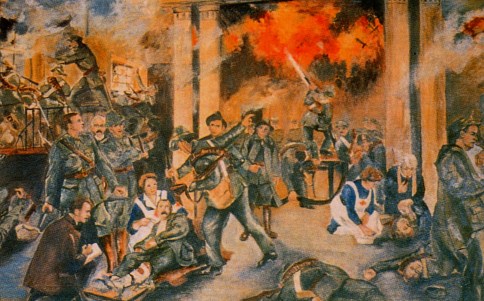
The French and then American emerged as the flag bearers of freedom by raising against the violent and repressive regimes of kings and the colonial masters respectively. The French got rid of kingdoms and Americans got independence from the colonial masters through violent revolutions during the second half of 18th century AD. “Other pre-Reign of Terror historical events sometimes associated with terrorism include the Gunpowder Plot, an attempt to destroy the English Parliament in 1605.”
The 20th century witnessed the growth and expansion of terrorist organisation in many parts of the world. The commonality in all of them was their struggle against the state apparatus which they had declared illegitimate dominance based on might was right dispensation. The examples of such networks and organisations abound which include Muslim Brotherhood of Egypt in 1928, Irgun and Lehi –the Jewish terrorist networks of Palestine in 1931 and 1940 respectively, Front De Liberation National of Algeria in 1954, Fatah and Palestinian Liberation Army of Palestine in 1959 and 1964 respectively, Front De Liberation Du Quebec of Canada in 1963, Red Army Faction of Germany in 1968, Weathermen of United States of America in 1969, Italian Red Brigade in 1970, Japanese Red Army 1971, Tamil Tigers of Sri Lanka in 1976, Egyptian Islamic Jehad in 1980, Hezbollah of Lebanon in 1982, Hamas of Gaza in 1987, Al-Qaida of Saudi Arabia in 1988, East Turkestan Liberation Organization of China in 1990, Aum Shinrikyo of Japan in 1990, Lashkar-e-Taiba of Pakistan in 1991 and Chechnyan Separatists of Russia in 1994. Besides this 21st century addition of Islamic State (IS) or Da’aish is also part of the same chain with a little innovation in fighting modalities, although the fundamental objective remains the same statehood as targets of their violence and moral discourse.
This led to the birth of republics which kept on expanding the world over during the centuries to follow. The republics recognised the fundamental rights of the citizenry to rule themselves and to live a free life under the political systems of their own choosing. The political ideologies developed around the central theme of ‘liberty’ called democracies entered into another showdown with authoritarian regimes of military dictators cloned with nation-states paradigm. The liberty-authority imbalances further fuelled violence in the societies; the lot was said and written on how to balance them.
The liberty-authority showdowns went global in reach and implications after second world war when the cold war started between capitalist and communist blocks of the countries, representing the democracies and dictatorships respectively. The cold war has been the global expression of the problems of statehood and governance. Both the authoritarian and democratic forces continued the create violence and generate divisions as well as conflicts of political ideologies.
The American and Soviets transformed the cold war into a hot war when in 1979 the Soviets invaded and attacked Afghanistan. The Afghan war has been very instrumental in adding new definitions to violence which is later understood as the ‘religious terrorism’. Afghans have groomed that the Soviets were non-Muslims and Infidels who had attacked Islam-a narratives whose architects the Americans decidedly were. Thus, the religion became the political agent of violence after Palatine and Kashmir which were harbouring such terror networks. The Iraq invasion of America added more fuel to fire because this was a total failure which exposed none better than the Western powers especially Americans who invaded Iraq, not for any other purpose except ‘oil’.

In Pakistan struggle between authoritarian and democratic ideals began with long before Pakistan came into existence but rather it started with the ‘ war of independence’ in 1857 when people of India both the Muslims, as well as Hindus and Sikhs, raised their voice against the repressive rule of British colonialists. All those who tried to raise voice were treated as terrorists. Later the people of Indian sub-continent continued their violent engagement with the coercive rule of British colonialists until they realised the independence in 1947.
Pakistan, not the Pakistanis, got the independence. Pakistan’s state continued with its colonial structure and makeup as the same feudal lords who were hand in glow with the Britishers managed to maintain the power and pelf structure of the society. The feudal not only grabbed the independence of the people but also maintained the same power structure in Pakistan in which these few families had monopolised the sources of wealth and importance. As a result the serious crisis of statehood ensued in which the authoritarian forces remained dominant over the democratic potentials causing long Martial Laws in 1958, 1979, 1977, and 1998 which laid the foundation of the reactionary violence first in the shape of the fall of Bangladesh in 1971 and the emergence of armed struggle called Movement for the Restoration of Democracy (MRD) in early 1980s against the dictator Zia-ul-Haq’s repressive policies through the promotion of Madrassa and Mulla culture, restructuring the state narratives through new discourses.
General Zia’s policy of ‘Islamization’ changed the state narrative in Pakistan and stood as a rock against democratic development. The institutionalisation of violence began due to the illegitimacy element within the governance model of Zia. The popular voice was neither heard in any quarter nor yet the rule of the supreme law of the land-constitution- was upheld. This state of affair cultivated hatred, intolerance, and biases on the basis of religion, sect, ethnic group, provincialism, gender, and more, paving the way for violence to grow uninterrupted.
The impacts of continued authoritarianism within the state structure cracked the social and national systems with the continued growth in intolerance and violence in Pakistani society. Followed by Musharaf’s dictatorship, the Pakistan society lost the charm of peace, exposing and making Pakistan vulnerable to terrorist groups who played hell with the weaknesses so caused by the illegitimate regime. This opened the Pandora box of violent extremism and terrorism in our country.
The illegitimacy of governance led to the crisis of statehood which further facilitated political violence which still continues. The recent wave of terrorism during February 2017 was linked to Lal Masjid Islamabad (operation GHAZI) of Jamat ul Ahrar, a militant religious group and many other similar incidents.
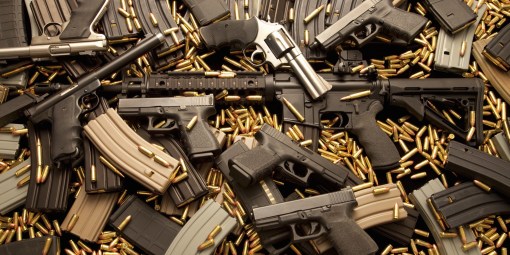
Therefore, the roots of terrorism as an expression of political or politically motivated violence, using intimidation, threat and destruction lie entangled in politics and political realm of the deadly power game between the agents of the state and the non-state actors. The appropriate response to challenge must be explored somewhere in the affairs of the state which are designed to address the public sensitivities for peace, progress, fair treatment, protection of their fundamental rights, and justice.
The discussion in point brings home the point that terrorism in Pakistan as in any other part of the world been birthed by the imbalances between the state authority and popular liberties. Those enchained have tried their best to shift paradigm by establishing their nuisance, aura and awe.
Thus, we need to mobilise people by engaging, motivating, and displaying response and responsibility on the part of the state because terrorism hibernates somewhere in the nature of the state citizenry relationship which no other system but democracy alone balances beautifully. It is perhaps the reason why state declared terrorists have been the freedom fighters of their people.

 Vision-Vista of JJ Baloch