
J. J. Baloch
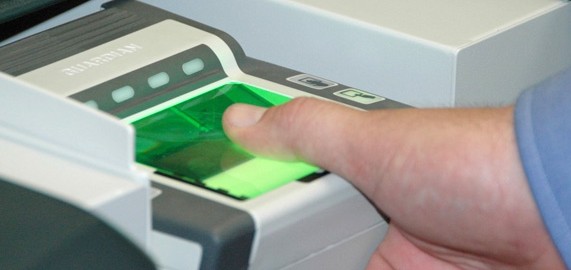
The use of biometric technology in policing is gaining greater currency worldwide in the 21st century. Though the biometrics, unlike forensics which is a new entry in law enforcement and investigation domains, is the oldest science of criminal identification starting from the “foot-tracking” techniques of suspects and offenders from time immemorial, yet its new miracles have left many detectives rolling their eyes in disbelief. For making our careers the success stories, we, the police officers, should learn to master the understanding and use of biometric tools and keep up with technological advances in this very challenging area of our professional work of crime prevention and detection.
What is Biometrics and How it Plays in Policing?
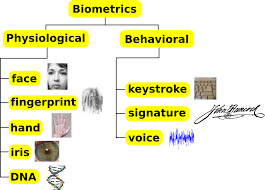
According to Encyclopaedia Britannica, biometrics means “to measure life, and that is what modern biometric devices do: they measure and analyse an individual’s characteristics, ranging from physical traits – friction ridge patterns on hands, iris and facial structure, for example – to behaviour-related characteristics, such as voice dynamics and handwriting. These devices typically consist of a sensor that scans the targeted characteristic, software that converts scanned data into digital form, and a database that stores biometric data for comparisons. A biometric check can identify an individual or verify identity.”
Judging humans through their acts is as old as humans themselves. Making development, progress, and advancement by working and struggling is the fundamental characteristic of human civilization that history and its associated sciences like sociology and anthropology claim to have recorded are born out of what we have come to know as human habits and habitations. These habits and habitations do not vary in varieties but they do differ in their combinations and equation present in every individual person. For example, all humans take birth, speak, understand, get happy, feel pain, eat, drink, sleep, live in families, learn the culture of their societies, grow and die but they all do all these things for different reasons, on different occasions and under different conditions. That is called their unique experience with unique signatures even if they are in billions.
Every individual is different; his or her fingerprints are different, his or her facial features vary; his or her body weight, pulse movement, heartbeat, walking picture, DNA structure, body type, and everything physical do have varying features. Even twins are not the same, though they have similarities as humans. It is the reasons why these distinctive individual habits help detective analysts find truth in the differences prevalent and inherent among the human creatures of Habit. Here what humans are mattered less but what is important is exactly what you do because it is where law enforcement biometrics comes in.
There are certain ways to measure the individual habits. These ways include a signature, typing, writing, reading, vein, diction, tone, voice patterns recognition and also other body parts moments and physical variation recognitions. These are used to analyse and paint a clear picture of an individual. In police, we use these individual physical variations to identify the suspects.
The Reality Change Policing
The biometric process of understanding human physical variations started for the first time in 1891 when fingerprints were used to classify inmates in USA and UK. Afterwards, many law enforcement and investigative agencies adopted the biometric methods of measuring the physical existence of humans. When police got involved in human biometrics and technology began to develop with Godspeed, the reality change policing into play for managing the reality of change through technological interventions by the police to establish the truths of their doubts and suspicions.
Traditional Biometrics
The biometric technologies in use of police evolved gradually and hand to hand with the technology as well as criminal innovations. The traditional biometrics involved different early methods of individual identifications. For example: “Gait Analysis” which tried to discover as to how people walk-foot tracking, talk-voice formations and tones, express both oral and written, behave-habits etc. Another method included “Olfactory Analysis” which employs the sense of smell to understand body odour that is different in every individual body and helps identify the person. Research confirms that body odour remains constant throughout individual life and its results are claimed to have been 85% accurate. “Visage Analysis” or facial feature analysis is the third traditional method used to identify persons. Though facial recognition has had some problems owing to some differences in ‘poses’, ‘resolution’ and ‘wardrobe’ changes that potentially affect the accuracy of facial identifications, yet these minor issues have been overcome by the scientists due to the advances in digital technology and improvements in existing systems over the years.
New Biometrics of Facial Recognitions
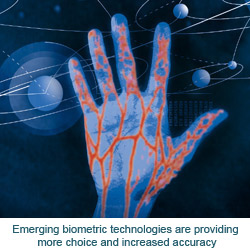
The photo identities in modern times have added new dimensions of facial recognition in the field of biometrics. Many law enforcement and intelligence agencies have developed large databases criminal and suspect faces and acquired digital facial readers. For example, FBI created the facial database in 2011 which is called “FBI Biometric Centre of Excellence”. This large database is now being used by local police departments for multiple purposes. Facebook, Google, Twitter and many other social media networks are the largest FBI sources facial data, perfecting agency’s search for missing faces. The claims of social media privacy, to a many, are nothing more than merely a misnomer. It is also a fact that incoming ten to fifteen years facial recognition is more likely to attain perfection in identification capacity. Many optimists are of the view that use of biometrics in policing will bring a number of benefits in terms of controlling crime and improving security which is listed as follows:
§ Terrorist Threat Assessment: Biometrics will be highly useful in spotting terrorist threat in advance of the happening of the untoward terrorist incident. Thus, it will help in the prevention of terrorism and violence in the society.
§ Lie-detection: Many security agents use lie-detecting robots which will broaden security services through the use of biometric sensors and scanners. These lie-detecting robots, which are called “Automated Virtual Agents for Truth Assessment in Real Time”, are being widely used at borders and airports. Moreover, Softwares have been developed to detect lies from eye movements. Such software using robots with sensors can pick up physiological signs which help in detecting that a person is lying. President Trump’s executive order signed in January 2017 authorise American Law enforcement agencies to ensure biometric exit-entry screening for the people travelling to the USA.
§ DNA Shaming: DNA shaming is a process of using someone’s DNA to link him or her to a crime and hence bring shame for the wrongdoer or violator; thus a policing subject. For example, “Face of Litter” was an advertising campaign which went viral on social media in 2015. Hong Kong sponsored it in partnership with advertising agencies such as Ogilvy and Parabon’s Nanolabs. Their defence department became part of this campaign in which technology had been used to identify physical characteristics of s litterbug. This technology used DNA to develop images in public places to shame the litterbug. DNA combined with Passive entry-exit technology was used to match data.
§ Heartbeat Identification: Many experts of biometrics have been using human heartbeat for identification. Heartbeat is the more individualized form of human identification than the other biometric methods such as facial, Iris, ear prints, vein patterns and body odour. Many research studies recommend preserving and protecting electronic health records of heartbeats as a way of biometric identification. Not that much absolute, the heartbeats present the unique signature of every individual identity. US Army and Police are using this technology for identifying individuals through their heartbeats as an effective biometric tool.
§ Body-worn Camera: Body-worn cameras of police officers, when connected with advanced biometrics, can help in taking pictures and in transmitting such pictures to the central database for the record. Police officers roam the streets and get their body-worn cameras on when they interact with people in real time situations. In this way, they keep the record of so many individuals which are stored in the central database and further used for record and identification whenever so required. Police scan the faces live as they scan licence plates. “In the long run, some futurists predict that real-time Iris recognitions could replace facial recognition as a key identification mechanism.”
§ Solving Missing Person Cases: Many techs and gear experts in policing are of the firm opinion that biometric methods of identification have been instrumental in solving the missing person cases. DNA electronics are used to compare and to match DNA indexes with DNA profiles of suspects and victims for using kinship analysis signatures that help identify missing persons. FBI extensively uses kinship software for tracing missing persons.
§ Reducing the Risk of Undercover Agents: The job of undercover agents has become riskier and trickier in times of high threats to law enforcement and intelligence personnel in the post 9/11 world of terrorism and hate crimes. Ensuring privacy and identity security of undercover officers through anonymity in the age of information anarchy are, indeed, become the daunting challenge. This helps undercover agents go undetected in achieving their desired targets.
§ Source of Criminal Evidence: Biometrics adoption is the very effective source of collecting reliable and provable evidence against criminals. Many countries have amended their laws to accommodate the biometric source of evidence as the most authentic way of evidence to be used in criminal investigations and as the most productive tool of crime fighting. Moreover, biometric methods are easier, cheaper, admissible and detective friendly means to make smart, scientific and systematic evidence management of criminal investigations.
The biometric advances have emerged as the future policing currency in many developing and developed countries. Their detective and preventive potential have been widely recognised as very cost-effective and reliable crime-fighting tools which are expanding their wings in law enforcement domain. This is more likely to grow in future and we should adopt it fully in Pakistan.
The Writer is a novelist and Criminal Justice Analyst.

 Vision-Vista of JJ Baloch