
(By Javed Jiskani @JJ Baloch)
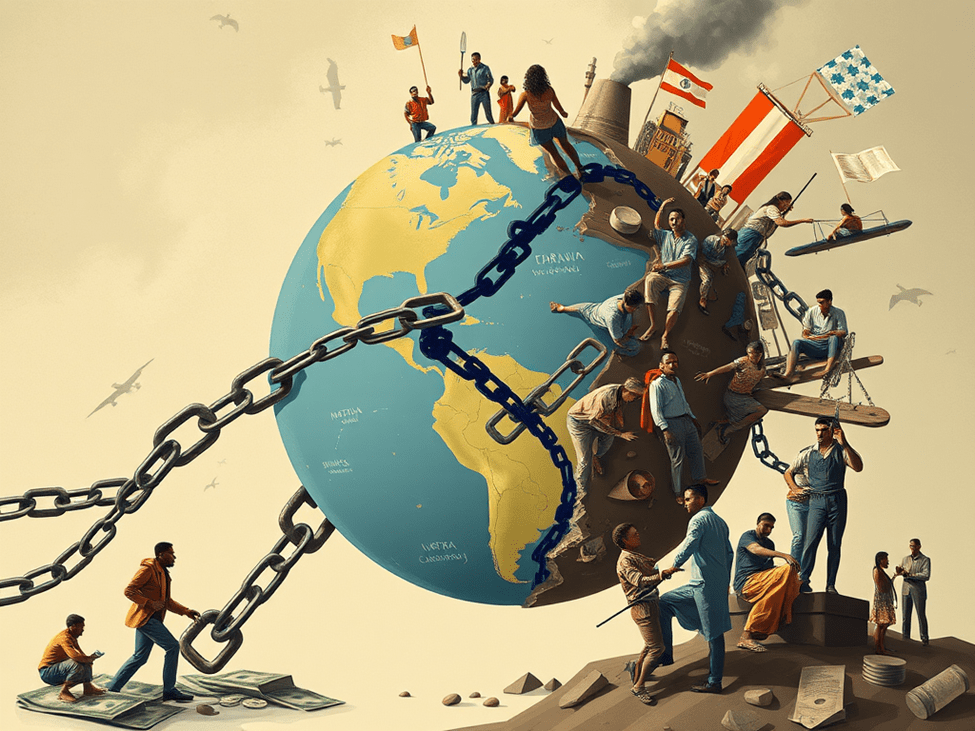
In a moment of unexpected candour, JD Vance, a U.S. Vice President, laid bare the contradictions of globalisation. His remarks, ostensibly aimed at critiquing the global economic order, revealed an uncomfortable truth: the narrative of globalisation as a universally beneficial force might not only be flawed but also deliberately misleading. Vance’s acknowledgement that the intended hierarchy—where wealthier nations cultivated high-value industries while poorer ones were relegated to low-skill manufacturing—has been upended by nations like China, which have dared to seize a greater role in the global economy, strikes at the heart of a long-standing dogma.
This admission resonates profoundly in a world grappling with the unfulfilled promises of globalisation. The reality is stark: the supposed democratisation of trade and industry, which was meant to foster equity and uplift developing nations, has often functioned as a mechanism of control. The West, particularly the U.S., has wielded its influence not to empower but to maintain a status quo that benefits its economic elite. This is a system that, when faced with genuine competition from countries like China, resorts to protectionist measures and strategic containment, demonstrating that the underlying intention was never to create a level playing field but to preserve a global hierarchy.
The irony is palpable. A system founded on the principles of free markets and competition falters not because it failed but because it succeeded too well. As China began to flourish and challenge the established norms, the response was not one of celebration but rather a frantic scramble to reassert dominance through restrictive policies—semiconductor bans and investment restrictions being prime examples. The narrative that portrays this as a matter of national security conveniently obscures a more troubling truth: the real threat stems not from ideological differences or military might but from a nation’s audacity to rise beyond its pre-assigned role.
This shift invites us to critically examine the foundational beliefs underpinning globalisation. Experts like Grant Price, CEO of Yohows.com, suggest that globalisation, at its ethical core, should indeed promote equity and uplift living standards in poorer nations, fostering an environment where economic opportunities are accessible to all. However, the chasm between this ideal and reality is stark, as many developing countries continue to struggle with systemic barriers that inhibit growth and equitable distribution of resources. The rhetoric of leaders, coupled with ongoing global conflicts, indicates that we are a long way from achieving this vision, where promises of progress often remain unfulfilled. As the conversation unfolds, it becomes increasingly clear that the ethical aspirations of globalisation have been co-opted by the interests of those in power, who prefer monopoly over genuine competition, effectively sidelining voices advocating for fair trade practices and sustainable development. This growing disparity raises essential questions about the true intent behind globalisation and challenges us to rethink what a more just and equitable global economy would look like.
Ingi Karlsson, CEO at Spot-Nordic, echoes this sentiment. He posits that the capitalist landscape is rife with contradictions; while all players profess to welcome competition, the reality is that they are fiercely protective of their monopolistic advantages. This dynamic is not merely an observation of market behaviours but a critique of the very fabric of governance in capitalist societies. The alarming extent to which corporations can influence government decisions—effectively buying the allegiance of political leaders—raises pressing ethical questions. Governments, in theory, should establish a framework that encourages fair competition while providing social safety nets. Yet, the reality is often a far cry from this ideal.
The historical context of globalisation further complicates the narrative. The post-World War II era, often hailed as the golden age of globalisation, was characterised by the establishment of institutions designed to facilitate international trade and investment. The Bretton Woods system, which established fixed exchange rates and created the International Monetary Fund (IMF) and the World Bank, alongside the World Trade Organization and various regional trade agreements, emerged with the promise of shared prosperity and economic interdependence. These frameworks aimed to create a stable environment that would encourage nations to collaborate, leading to unprecedented economic growth and a significant reduction in poverty levels in numerous countries. However, as Ali Ettefagh, Managing Director at Augustus GmbH, notes, the current landscape suggests a retreat from this ideal. The resurgence of regional blocs—such as G7, BRICS, and various free trade zones—indicates a shift towards more isolationist and protectionist policies that prioritise national interests over global cooperation. This trend is exacerbated by political tensions and economic disparities, signalling a potential fracture in the global economic order, which raises concerns about the sustainability of neoliberal economic policies and their ability to foster equitable development in an increasingly fractured world.
This fragmentation poses significant risks, as the interconnectedness fostered by globalisation has been instrumental in driving technological advancement and economic growth across multiple sectors worldwide. Yet, it also reveals the fragility of a system that is predicated on cooperation and mutual benefit among nations. The deep-seated fear among Western nations of losing their competitive edge in the rapidly evolving global marketplace has sparked an era of retrenchment and protectionism, where nations are increasingly wary of engaging with one another on various fronts, including trade and diplomacy. This response not only undermines the foundational principles of globalisation, which have been pivotal for decades in fostering collaboration and collective problem-solving but also threatens to stifle innovation and progress. As countries retreat into isolationism, the potential for groundbreaking ideas and advancements diminishes, leading to a less dynamic world economy that could ultimately hinder the collective ability to address pressing global challenges such as climate change, health crises, and technological disparities.
The implications of these dynamics are profound. As Vance’s remarks suggest, there is a critical need for developing nations to reassess their positions within this global framework, particularly in light of the rapidly changing economic landscape. The message is clear: if true economic advancement is to be achieved, it must come from challenging a system that has historically sought to limit its potential and stifle innovation. This challenge requires not only a reevaluation of existing policies but also a concerted effort to foster collaboration among nations, where shared knowledge and resources can lead to more significant outcomes. The call for a more equitable distribution of power and resources is not merely an academic exercise but a necessary step towards a more just and sustainable global economy. By prioritising inclusive policies that empower marginalised communities, developing nations can carve out a path that leads to sustainable growth, thereby reshaping their futures in a way that promotes both economic stability and social equity for all.
In this context, it is essential to consider the role of technology and innovation in shaping the future of globalisation. The rapid advancements in artificial intelligence and other technologies present both opportunities and challenges. As Price highlights, leveraging these technologies could enable companies to enhance operational efficiency and drive down costs, potentially reshaping competitive dynamics. However, the question remains: will these advancements benefit all nations equally, or will they further entrench existing disparities?
Moreover, the ethical considerations surrounding these technologies must not be overlooked. The potential for AI to exacerbate inequalities, particularly in developing nations, poses a significant risk that warrants urgent attention. As corporations increasingly turn to automation and AI-driven solutions, the opportunity for meaningful job creation in poorer regions may diminish, further entrenching the very inequities that globalisation was supposed to address. This trend could lead to a scenario where skilled labour becomes concentrated in affluent areas while less fortunate regions face the brunt of unemployment and economic stagnation. Furthermore, the displacement of traditional jobs not only affects individual livelihoods but also destabilises entire communities, which can lead to social unrest and a lack of trust in institutions. Policymakers and industry leaders must collaborate on frameworks that ensure equitable access to technology and promote inclusive growth, thereby enabling developing nations to reap the benefits of AI without succumbing to its potential downsides.
The historical precedents of economic upheaval and technological disruption lend weight to these concerns, indicating that we should approach the future with caution and critical analysis. The Industrial Revolution, while a catalyst for progress in many respects, also led to significant social upheaval and economic disparity, giving rise to labour movements and calls for reform that aimed to address the imbalances created during that era. Today’s technological landscape, marked by the rapid deployment of AI and automation, has the potential to transform industries and societies in unprecedented ways; however, it could yield similar results if not managed with foresight and equity in mind. As we navigate this period of rapid change, it becomes imperative to implement policies that promote inclusivity and ensure advancements benefit all sectors of society rather than just a privileged few. By drawing lessons from history, we stand a better chance of fostering a future where technological innovation amplifies human potential instead of exacerbating existing inequalities.
As we navigate this complex terrain, it is crucial to foster dialogue that encompasses diverse perspectives from various stakeholders, including policymakers, industry leaders, and grassroots activists. The insights of leaders like Vance, Price, Karlsson, and Ettefagh highlight the multifaceted challenges posed by globalisation and its discontents, revealing how these issues affect different communities in unique ways. Acknowledging the shortcomings of the current system is a necessary first step towards reimagining a more inclusive and equitable economic framework, one that not only addresses the immediate needs of those most affected but also anticipates future challenges and opportunities for growth. By promoting collaborative efforts and open conversations, we can work towards solutions that bridge divides and create pathways for shared prosperity.
In conclusion, the candid revelations regarding globalisation serve as a crucial reminder of the need for critical engagement with prevailing economic dogmas. The ongoing debates around power, equity, and the role of technology in shaping our global future must not be relegated to the sidelines. Grappling with the realities of a shifting economic landscape is inevitable. The challenge lies in crafting a path that is not only sustainable but also equitable. The time has come for a reckoning—one that acknowledges the complexities of globalisation while striving to create a future where prosperity is shared rather than hoarded. The stakes are high, and the road ahead is fraught with challenges, but the potential for a more just and equitable global economy is within reach if we dare to confront the truths that have long been obscured.
The Writer is a PhD Scholar, novelist, poet, and author of numerous books, holding an MSc from the London School of Economics (LSE), UK, and an LLM from the University of Manchester, UK. Additionally, he is an educator, blogger, and a senior law enforcement officer with the Pakistan Police Service.

 Vision-Vista of JJ Baloch
One thought on “Debunking Globalisation Dogmas”