Debunking Democratic Dogmas

J. J. Baloch

Democracy pakistan

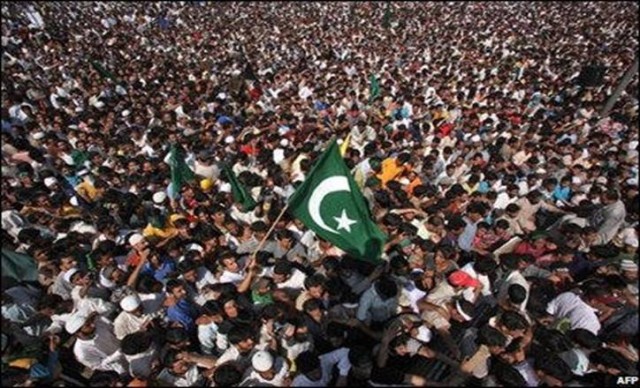
The prophets of democracy seem to be mesmerized with the fantasies of democracy for its being inevitable, ultimate and the eternal political dispensation, having no substitute and no alternative, at least on the doctrinal level, as the awesome and unprecedented ethics and philosophy of statehood. However, the democratic experience of different nations over the centuries have brought forth many dogmas of democracy which need a critique when we are going to elections and celebrating democracy like the conquest of the world and the panacea for our all socio-political troubles.

The first and the foremost dogma is the marriage of inconvenience between liberty and tyranny. The democracy is ethically grounded in the political belief of civil liberty or fundamental freedoms where its real dilemma is rooted. The pioneers of democracy like JJ Rousseau who claimed that people are born free and should remain free to live the way they think is right and good for them and this could happen only in the vote-based majority rule. The scholars like Larry Diamond (2007) in his celebrated work “The Spirit of Democracy” calls the 20th century as the peoples’ century because in the last decade of the 20th century the Soviet citadel of communism collapsed, leaving many of its ideological partners worldwide to follow the suit. However, after two decades of the transformation of many East European countries to democracy, the threat to their fundamental freedoms and to their national sovereignty still persists as the common men, women and children face more problems caused by the state than by non-state or criminal actors. In America for example, harsh policies of Donald Trump for re-living in the past in what he says “making America great again or you are fake news”. This approach reminds of bad past memories of social divisions, inequalities and violence in American society. The strict immigration laws and counterterrorism regimes etc are considered by many libertarians as the grave threat to basic human rights of the American people. Such policies tend to encourage violations of fundamental human rights and civil liberties, which are enshrined in the bill of rights in the American constitution. As Noam Chomsky aptly says “counterterrorism is another form of terrorism especially when it comes to stricter laws and powers to state enforcement mechanism to deprive the citizenry of their constitutionally guaranteed rights”.

According to Larry, democracy is the only system of governance that recognises the human capacity to rule himself or herself. There is hardly any dissension in this notion but in the political dispensation in vogue around the world, there is a lot that flies in the face of this liberty-centric philosophy of democracy which appears fictional and poetical when many governments apparently born out of the electoral process and public mandate run their entire show of governance in an undemocratic way as it happens in many regimes worldwide, including Pakistan. The elected autocrats like Vladimir Putin of Russia, Trump of America, Erdogan of Turkey, Xi Jinping of China, Kim Jong-un of North Korea and many more around the world send clear signals to alive-minds that the neo-authoritarianism sits well at the heart of modern democracies in the world today. Modern democracies are, therefore, cooking serious contradictions within.
pakistan-flag2-640x388

The coexistence of democracy with capitalism is the second dogma of democracy. Many argue that democracy is the system of government that stands for an egalitarian society. For the claimants of democracy, it would be a bitter pill to swallow that democracy is yet to iron out its inherent and intrinsic tensions with capitalism. Take the example of America that claims to be the pioneer of the revolution of democracy worldwide, where everything that takes place is either in favour of liberty or against it. However, the critics of the American war of independence or the democratic revolution argue that American war of independence is the only revolution in the world history that can be called “rich man’s revolution”. It had nothing to do with poor or the common men. As a result, capitalism instead of socialism deepened its roots in the corporate American political order in the name of civil liberties. Though the institutional strength of the electoral system and rule of law kept balancing the two extreme poles of plenty in few homes and poverty in many, causing many unrests, civil wars and political upheavals, yet recently classic electoral trends are changing with young generations who have become fed up with the hollow rhetoric of old politicians.

The underhand deal of democracy with rightist politics which seeks to go with status quo accepting the vote based system as the infallible system to think of any other alternative of leftist approach is the third remarkable dogma of democracy. In Pakistan’s upcoming polls, political analysts are predicting that the mass vote will more likely go for a change and people in Pakistan, like any other countries, have become tired of classical conservative approaches which standby status quo. Youth everywhere in the world vote for change and in Pakistan 66% population is youngsters under 30 years. That is perhaps the reason why “tabdeeli slogan” falls on receptive ears. The Pakistan electoral episode of 2018 would probably reflect the trends of México’s recent July 1, 2018, presidential elections where the newly elected leader Andres Manual Lopez Obrador- AMLO, 64, of newly formed left-wing Morena party won the landslide victory on a single agenda of being tough on corruption, crime and Trump, a path the PTI of Imran Khan in Pakistan, being leftist, is walking on. The leftism in politics is taking off because the traditional system of democracy is not delivering. In a similar vein, contesting primary congressional elections of Democrats in New York City Alexandria Ocasio-Cortez, 28, a millennial candidate with her articulated socialist beliefs focussing on health care, employment, free college education and criminal justice reform defeated political veteran Joe Crowley, who had long remained undefeated for 14 years and who was to become next party leader or speaker of the house and who is 56. Ocasio won by 57.5% of the vote. “Following Ms Ocasio-Cortez’s win, Merriam-Webster dictionary tweeted that socialism emerged as their top search item.” Democracy’s long-time companion capitalism is losing against the neo-socialism. This means democracy, as it is understood everywhere, no more remains intact and ideal but rather needs rigorous rethinking.

The fourth dogma is that democracy focuses on humanity, a claim that should adjust well with the globalization and global political and economic parity or balance. However, the case with democracies is reverse of it. Owing to being in the grips of nationalism, democracy back faces the globalization. This is very well demonstrated in the Brexit. Nationalistic forces overwhelmed the regional and global overtones in one of world oldest and the most conservative democracy of Great Britain. Out of 608 votes in British Parliament, Brexit survived only with the margin of six votes-301 against and 307 in favour. Thus, democracy is yet to explore the ways to adjust its humane, universal and global ideals with what we call local or national dominance on it.

The fifth dogma of democracy refers to its claim of being the representative system of the people, by the people and for the people. The critics spell this proposition as “off the people, buy the people and far from the people.” This is also true of democracy in many contexts as for instance Pakistan, India, or any other countries because democracy anywhere in the world can not claim to represent all people but only a winning segment who work more for the party interests rather than the popular well being. In many countries, like USA, politicking, electioneering, lobbying and gerrymandering require money as Jane Mayer, author of the seminal book: “The Dark Money” (2016) alludes to American political system where the money is the mandate, not the will of the people. In Pakistan case is not much different because here too everything has a price and many seasoned politicians have been marked for flowing cash for winning votes. Even if votes are transparently cast, the winner might have secured not more than the 30% of the total population because all heads are not registered due to age and other reasons and also all registered persons in voter lists do not cast their votes. In Pakistan turn-out remains around 50% on average but in advanced democracies, the turn out might be averagely not more than 80%; and that eighty per cent would never be the eighty per cent of the total population.  The successful group wins the minimum of 41% votes for victory in elections and that could hardly make more than 30% of the total population of any country. In this way, democracy’s claim of popular representation is merely a hoax and illusion. Instead, democracy tends to promote popular exclusionism.

Last but not the least, democracy claims to have offered equal social media access to all people to express their opinions and get into real-time dialogue model-new media which claims to be more democratic than democracy in the framework of globalization. Globalization and unequal access to the people due to disparities in the levels of education, economy, geography, and culture do not go together and democracy appears irrelevant and helpless to intervene here because of its national and statutory nature. Rather the internet is too democratic to coexist with democracy. The media reports confirm what the British intelligence agencies pointed out during recent episodes of Russian meddling in 2016 presidential elections in America which speaks volumes of the internet’s being authoritarian and criminal tool rather than the ethical force to ensure the digital equality. In a way, internet incapacitates democracy to work for the integrity and security of popular mandate-the democracy claims to be its soul and basis.

The real challenges of globalization, imbalances in access to new technology, unequal distribution of resources within the nations or groups and throughout them, morphing inequalities of status and opportunity, blurring of ideologies and borders, mounting materialism, vanishing value systems, increasing demands for absolute freedom, absence of inclusive and representative government and lacklustre attitude towards laws and nature fly in the face of democracy’s classic claims of equality, freedom, justice and pluralism.

The writer is the author of many books and “Whiter than White”, English Novel and a senior police officer at Police Service of Pakistan. He tweets @Baloch_JJ

Crime Biopsy through Forensic Accounting

J. J. Baloch

Bookkeeper-and-an-Accountant

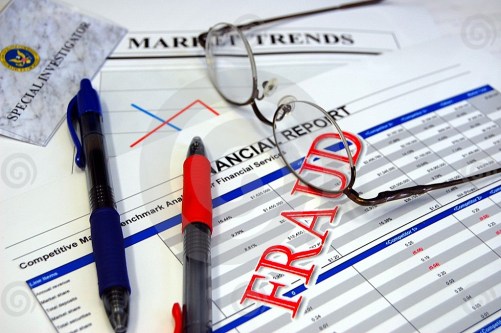
With the innovations in crime culture and industry in the 21st century, the criminologists and crime scientists have invented new scientific ways of detecting, tracing, tracking, and solving the most complicated and undiscernible crimes in the modern globalised world. Forensic accounting is one of the many new scientific ways to make the biopsy of crime, the most importantly white collar that hardly leaves any crime scene behind in the literal sense. It is high time for Pakistan to embrace this trend and to equip its law enforcement mechanism with forensic accounting skills for better results in dealing with new money-related while collar crimes.

Today, white collar crime is more sophisticated and devastating than it was ever before. In recent years, the complicated nature of current racketeering and graft regimes has driven the growth of forensic accounting worldwide. Though a niche field, the forensic accounting is considered as an inevitable part of criminal investigations, criminal justice process and also civil litigations. Forensic accounting has become core, popular and necessary skill especially to deal with the white collar crimes like money laundering, terrorist financing, embezzlement of funds and tax evasions etc.

In Pakistan, we faced a lot of criticism while dealing with some high profile cases such as Axact Case, Benazir Bhutto Murder Case, and Panama Scam to name a few. We have not been able to take the services of forensic accountants in these cases. Honestly, speaking we don’t have single qualified or certified forensic accountant in our police and law enforcement departments. Therefore, many areas of vital importance to ensure justice to all parties involved in these cases remain unaddressed properly.  However, the magnitude of corruption and tax evasion cases goes high every other day in Pakistan.

What’s to come in future is unmistakably splendid for forensic accounting. Some surveys and studies anticipate an incredible 25% increase in demand for forensic accountants in recent years. Changes in regulatory enforcement are expected to spur even more positions for forensic expertise. According to research in the domain of investigations of white collar and transnational organised crimes, an accomplished or certified forensic accountant should be curious, creative, persistent, communicative, articulate, cogent, analytic, discrete, searching and attentive to details in additions to have the necessary skills of accounting and law.

forensic-accounting-simi-valley

Forensic accounting is an exciting and rewarding field that allows professionals to use their accounting knowledge and investigative skills to catch criminals, settle lawsuits, and reduce the risk of large-scale fraud. Success in forensic accounting often requires a wealth of experience beyond those traditional, entry-level accounting roles. We need to prepare modules for forensic accounting in our law enforcement academies like the National Police Academy, and FIA, NAB, ANF Academies, throughout Pakistan. However, very recently FIA Academy invited experts from the United States and European counties in liaison with ICITAP to conduct one week course on forensic accounting here in Islamabad and people from different agencies including NAB and ANF and regular police participated, and we got excellent feedback both from the trainees as well as trainers.

There are a plethora of reasons as to why we the law enforcement and investigation agencies in Pakistan should inexorably focus on this nascent but very remarkable field of forensic accounting. First, guaranteeing the fair play in investigations is the noblest of all professional duties of a law officer. However, the ideal of fairness remains unrealisable without required expertise that the knowledge of forensic accounting fulfils in a befitting manner. The high profile graft cases require specialised attention on the part of both the investigators as well as the prosecutors. Deciphering complications and ensuring transparency through professional excellence in forensics is something beyond the domain of traditional investigation techniques. The investigative methods, like this, call for innovation in crime-solving approaches.

Second, more substantial crime investigations demand investigators to reflect high ethical and professional standards in tracing complex money trails which sometimes involve trans-jurisdictions, quite unexperienced by our investigation officers through conventional methods. Many judgements by our superior courts in Pakistan on corruption and embezzlement of public funds have time and again identified this vital component of police and law enforcement investigations as the grey area or a significant vulnerability which serves nothing other than offering an easy exit door to the accused persons for going scot free. The phenomenon called the lack of evidence, so caused, has rendered our criminal justice system unuseful and unproductive in achieving its mandated goals any longer.  This state of inefficiency calls for a serious revisiting of the entire process as well as the mechanism of investigation or evidence collection in Pakistan.

The actual problem lies not in the lack of evidence but rather in the lack of investigative skill in our staff to trace the evidence using modern scientific techniques. For proper prosecution and adjudication of the cases of high national importance, we direly need sophistication in our way to investigate the crime. The proposition that “the absence of evidence is not the evidence of absence” sits well in the context of Pakistan’s criminal justice landscape.

However, Forensic Accountants can play a very instrumental role in Prevention and Risk Management. For example, corporate entities and government agencies are increasingly turning to forensic accounting experts for assistance with preventive measures, designed to keep fraud and the associated expense of the investigation or litigation process to a minimum. It is so perhaps because the forensic accountants can conduct an internal audit to uncover potential pitfalls and suggest early steps to prevent fraud. Additionally, in the corporate environment, forensic accountants can also monitor compliance with emerging regulations.

Above all, in order to ensure the transparency and meritocracy in our criminal justice system, it is of prime importance for law enforcement and investigative agencies such as Federal Investigation Agency (FIA), National Accountability Bureau (NAB), and other anti-corruption bodies both on federal and provincial levels in Pakistan to hire and to recruit forensic accountants. And we should also offer them handsome pay packages so their performance could improve. Two essential elements are eating into the vitals of our law enforcement establishments and organisations; these include imbalances between the volume of work and availability of required manpower or resources and also disequilibrium between the nature of the crime and the available investigative or law-enforcement capacities of our police and other civil law enforcement syndicates.

In this connection, it is important to remind that not only recruitments will do but in addition to that training of our available staff will also go a long way in contributing towards the capacity building of our present staff and officials. However, the training in sophisticated crime investigations is very costly and requires funds and other resources such as trainers and state of the art training facilities. Looking into our kitty we cannot be overambitious but realistically speaking we have many donors around us, both nationally as well as internationally, if we make them believe that their money will be spent transparently and fairly on achieving the pious goals of justice and peace, they will be more than happy to contribute.

This area of investigative skills is stepping ahead of what we have been struggling with during the last two decades. We have established some of the forensic labs in Punjab particularly which is indeed a commendable step in a right direction and which needs to be expanded in every police department with the same level of expertise. However, these labs both hitherto established and yet to be established hardly address the challenge of forensic accountancy, a skill which our investigation team managing crime scenes and huge data analysis should have for tracing and solving the most complicated white-collar and transnational organised crimes such as money laundering, terrorist financing and trafficking in persons.

All this needs leadership, vision, trust, credibility and will to garner the support of international organisations to innovate and reform our rustic law enforcement mechanism for rising equal to the magnitude of the challenge of crime and terrorism in the turbulent times we are living right at the moment in Pakistan.

The writer is the author of many books and “Whiter than White”, English Novel and a senior police officer at Police Service of Pakistan. He tweets @Baloch_JJ


Emergent Authoritarianism of Internet

J. J. Baloch

Biometrics-image-for-web

Donald Trump success in 2016 presidential elections has brought forth the truth of how significantly the internet dictates and influences the mind and choice of the people in free societies. Numerous scholars fear that the fate of elections and democracy is by all accounts puny and murky because of online helplessness for moving the appointive procedure. Internet’s democratic authoritarianism is an emerging threat to the future of democracy as a system of governance that rests its claims on the belief of an individual’s freedom and ability to self-rule.

Facebook CEO Mark Zuckerberg faces a congressional hearing on how Facebook information was utilised amid the 2016 presidential election. Friedman maintains that Mark Zuckerberg is in a troublesome position. From one viewpoint, his business keeps running on making his clients accessible for marketing. In pitching access to his clients, he usually needs them to be both available and persuadable. On the off chance that he denies these two premises, the earnings of promotions and advertisements on the Facebook decrease. Then again, on the off chance that he insists the value of the advertisement, he will then be viewed as making an engine that undermines democracy.

The online advertising has been developing unfathomable. Be that as it may, this doesn’t mean it is ending up more viable. Many argue that the Russians meddled in the U.S. election by spreading false news stories enabling Donald Trump to win the U.S. presidency. In the United States, the cases of ill-conceived elections date back to 1824, when Andrew Jackson accused John Quincy Adams of taking the election. Be that as it may, the internet issue is diverse because it eventually affirms that the voter’s mind research is so powerless against the manoeuvres of internet marketing that a Hillary Clinton voter influenced to vote in favour of Trump and the other way around.

The endeavour to delegitimize elections has turned out to be normal. First, In the United Kingdom, against Brexit campaigners have attempted to switch the result of the submission by asserting that the defenders of Brexit lied and deceived the unmindful. Secondly, in Israel, Benjamin Netanyahu’s electoral triumph was held suspect by some due to his very late cautioning of high Arab voter turnout with an end goal to rally his supporters. Thirdly, be that as it may, it has been in the United States where the most outstanding claim was made, and that claim was constructed widely in light of the power of the internet. Lastly, the claim that the Russians interceded in the election, mostly by taking messages and halfway by planting lies on the internet has raised political alarm bell for democracy as a reliable system to protect freedom. Aside from this plot, it’s contended, Trump might not have won. Add to this the Cambridge Analytica undertaking and the scheme becomes much thicker.

The association between claimed Russian obstruction and Cambridge Analytica is dim. However, they are both being utilised as cases of how the internet can influence election come about. The critics doubt such methods are sufficiently compelling to change voters’ minds and impact the result of a presidential election. Some claim that Cambridge Analytica was an ultimate power in Trump’s election. Indeed it isn’t clear how powerful Cambridge Analytic’s exercises were. The suggestion to take action, as advertisers call it, was to have those people who got altered promotions or another substance vote in favour of Trump.

The core issue isn’t one of promoting yet one of the citizenries, argues Friedman. On the off chance that the residents’ minds are so helpless against untruths and control, a definitive supposition of advertising is that once you discover voters, you can induce them to do things they would not do something else. A critical inquiry would then be whether this has dependably been valid and the internet makes the procedure more productive, or whether internet innovation inconceivably expands voters’ vulnerability. From one perspective, the eagerness of voters to alter their opinions in light of the data they get should be a centre segment of popular government. A voter unequipped for altering his opinion debilitates majority rule system. Be that as it may, the internet can control – as opposed to impact – somebody’s mind, at that point, the internet jeopardise democracy. This is the reason the subject of how viable internet advertising cuts to the core of democracy.

biometrics-livescan-571x270

In spite of the fact that suitable data isn’t available, yet numerous political researchers speculate that a significant portion of the campaign advertising went to individuals who weren’t powerless to be controlled and that the individuals who were vulnerable as of now had their minds made up. In any case, others do guarantee that the faith in the power of the internet has made a doubt that a chose competitor can be ill-conceived.

Friedman aptly evaluates: “One of the foundations of a democracy is the willingness of the defeated to accept the outcome of the election and to go into loyal opposition, planning for the next election. If that is lost and elections are no longer definitive, then the governance of the Republic becomes illegitimate. Therefore, the question of whether online marketing is so powerful as to reshape the mind of the voter and thereby the election becomes an issue central to our democracy”.

Since that is the situation, everybody will attempt to play the game of real politics of reaping the maximum benefits of internet influence on changing political opinions of the masses. Thus, the presumption that the voter is controlled by internet carries the weight. The internet as a capable instrument to impact the political decision of the voters is by all accounts a significant test to the vote based system which has confidence in the limit of the voter to settle on the autonomous election in the constituent election.

The expanding role of the internet in shaping political thinking and choices highlights the “tension between international humanitarian law and the individual state’s territorial integrity”. International law accounts for respect of the political sovereignty of the states and bars from foreign or imperialistic interventions, but international powers make violation of this principle on grounds of human rights violations by the target state. The examples of such interventions in recent history have been witnessed in Iraq, Afghanistan and Libya. In 2015 Russia and China entered into ‘nonaggression agreement’ for respecting each others’ cyber sovereignty. Russia and China have attracted all BRICS-Brazil, Russia, India, China, and South Africa- to get into the association of cyber sovereignty. Besides this, China has built a “firewall” to protect its cybersecurity and Russia has adopted restrictive laws to control interceptions before Putin finally went into elections.

In Pakistan as well as in Turkey the growing power of the internet was witnessed in grand dharnas and 2016 failed military coup respectively. During Faizabad, sit-in government ordered mainstream media to go off air but the clerics continued to mobilize people using Facebook, Whatsapp and Instagram. Similarly, Erdogan saved his government by mobilizing people through Facetime message to independent media channels when the coup staggers had controlled the media channels. Turkish military was unaware that traditional media was no longer the only engine of the message but social media with global operations and networks knows no territorial and physical barriers.

In Pakistan, a significant number of us contend for the online computerised voting system to be introduced. In any case, it is indispensable for us to comprehend that a nation like the USA couldn’t shield their online electoral process from gear charges and obstructions, what to talk of Pakistan where political issues are surrounded by interest, intrigue and notions of conspiracy.

The writer is a senior police officer, an author of Whiter than White, English Novel, and an alumnus of London School of Economics. He can be reached at http://www.javedjiskanibaloch.com and jiskanijavedpsp@gmail.com


The Climactic Threat of Climate

J. J. Baloch

environment.degradation

Eyeing the climactic threat of climate violence from the standpoint of policing sounds inevitable for the peace preparedness in times ahead. The leading threat to human security emanates not from the weapons of mass destruction or nukes that the government’s claim to have control, but instead, it is more likely to originate from the climate change that appears to be beyond the control of human power. However, human wit and experience can delay the decay through working and investing in the preservation of nature. The planet earth that claims to support life through its natural resources tends to transform into un-liveability due to imbalances caused by overpopulation and the extreme consumptive habits and trends.

Police as the agency of the protection and peace should make the fair idea of how climatic change is going to impact human behaviour regarding “human security” in the society and on the planet. The job of a police officer is very much trickier as he or she has to predict the violence. Predicting the possibilities of violence enables the officer to prepare for the crisis. As the police are not directly responsible for so many things that one way or the other affect public safety and social peace but due to their relative relationship, the officers have to be alive and sensitised towards everything that is likely to affect the peace and the life, liberty and property of the citizenry. The disturbances caused by extreme temperatures and natural disasters to the populations result in homelessness, death, displacement, disabilities, loss of family members and destruction of family/community economy. It is not too late that the scientists, politicians, Practioner government officials and policy experts should join together “to connect the dots between the climate change and the human conflicts” and violence in the society. “Among the many threats associated with climate change, deteriorating global security may be the most frightening of all”[1]

The research carried out in the field of climatic imbalances is suggestive of the fact that the agencies of peace must be alive to the possibilities of misbalancing everything human and everything social in the future societies. According to the revelations made by the scientists studying climate, “the impacts of the long-term trends toward a warming climate, more air pollution, biodiversity loss, and water scarcity are likely to fuel economic and social discontent mostly in the most populous and the most misgoverned countries. Pakistan stands in the front line of the most likely victims of climatic disasters.  The studies further warning about the possibilities of social upheavals in the current year 2018.

“The biggest thing missing is an explicit attribution of the cause of global climate disruption. Scientists have largely ruled out any natural explanation, concluding that the human release of greenhouse gases explains all the warming that has occurred since the 19th century. The two great culprits are the burning of fossil fuels and the chopping down of forests.”

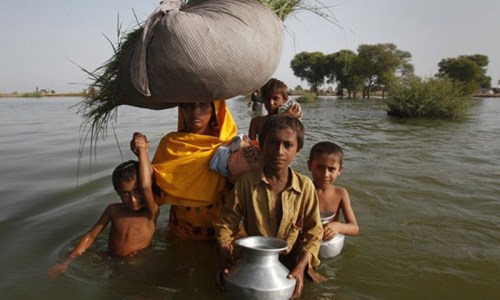
It is very heart-sickening that Pakistan pays a little head to climatic changes that involve natural disasters. In the 21st century, Pakistan has been witnessing severe natural disasters. The examples of the 2005 earthquake and 2010-11 floods are worth mentioning. Many analysts ascribe the problems of the meteoric rise of violence in our society as a result of the displacement caused by the natural disasters. The massive internal migrations and demographic boom coupled with the ill-planned and unregulated growth of cities and negligence of rural economies in Pakistan complicate the development process in the country. From per acre yield and the industrial productions to the energy generation, everything gets slower and slower.

Pakistan floods

The coastal region of Pakistan experiences severe environmental challenges. The issues rising the level of seawater, depletion of land fertility due to increasing water scarcity will go a long way in fuelling internal as well as regional problems with neighbouring countries, most probably with India due to ongoing water tensions linked with the final status of the Kashmir valley. Indian occupation of Muslim Majority Kashmir valley is the constant source of trouble and violence in the region. The uncertain political status of Jammu and Kashmir has left both the countries at the loggerheads with each other. Indian presence in Kashmir also threatens Pakistan as well as the Kashmir’s, and therefore the future of violence seems to the brighter in this region and the trends of extremism and radicalisation are sure to be fed by the atrocities that India unleashes on the innocent Kashmiris.

The water issue is also linked directly with Kashmir and control on the waters coming from Kashmir allows the strategic upper hand to India and deprives Pakistani people of availing the water to support their earning and livelihood. Many geopolitical experts fear that the water scarcity is the primary driver of the violent conflicts “in many parts of the world including Syria” and Yemen, India and Pakistan and many other countries. The political stalwarts believe the “control of water supplies is being used as a weapon of war” by many nations. “Water scarcity, compounded by gaps in cooperative management agreements for nearly half of the world’s international river basins, and new unilateral dam development is likely to heighten tension between countries.” Besides this, the underground water levels are always going down in Pakistan and many other regions on the planet.

The presence of foreign refugees in Pakistan is a source of grave concern for peace builders. The people from Burma, Bangladesh, Iran and Afghanistan are illegally living in Pakistan due to the displacement as a result of the war in their home countries. Their presence is problematic not in the sense of their being a burden on the exchequer but because of the explosive cultural values that conflict with the traditional culture of Indus saga. Moreover, the concentration of foreigners in Karachi is another source of rising violence in Karachi and its vicinities. The presence of refugees is dangerous from all issues and needs to be fixed forthwith by sending all immigrants to their home countries. The deportation will significantly affect the levels of violence in our society.

0819-Pakistan-Floods-help-relief_full_600

The global warming due to the scarcity of natural resources results in social disruptions. The earth keeps warming and getting hotter to the hottest during the last one century due to the expansion technology that disrupts nature and uncontrolled growth in population. The former century has been the warmest century in human civilisation, and the scientist fears the 21st century would break the records. “Extreme weather events in a warmer world have the potential for greater impacts and can compound with other drivers to raise the risk of humanitarian disasters, conflict, water and food shortages, population migration, labour shortfalls, price shocks, and power outages. Research has not identified indicators of tipping points in climate-linked Earth systems, suggesting a possibility of abrupt climate change.” In Pakistan, the scarcity of water, rainfall, rising temperatures, melting of ice in the Himalayas and rapid population growth indicate the severity of the problem. Scarcity and poverty were born with violence in the hell, and both are perpetuating in Pakistan as eternal guarantees for the prevalence of violence in our society.

The scarcity of resources accompanied by the poverty and bad governance are proven best hosts of the violence in any society. Pakistani society in the second decade of the 21st century presents the welcoming mood to violence, extremism and intolerance. Draught, hunger and unemployment could help the facilitators of violence. It has been my own experience dealing with the crime and criminals that two significant factors lead people to go violent and break the law or cultural barriers. The conditions of survival become so harsh that even moral bastions loose appeal to the people who can kill and die just for peanuts. The story of the suicide bombing in Pakistan and the study of the family backgrounds of the suicide bombers uncovers that the problem is least ideological and religious and the best economic and social.

The conditions of economic recession, resource scarcity, illiteracy, unemployment and weak writ of the government always end up in uncontrolled political instability which presently prevails in Pakistan. The political instability is the benchmark of the fragile political system and unappealing political ideologies with mediocre political leadership who never adjust their kingly lifestyles within the limits of the law. As a result, everyone living side by side these leaders claim impunity as their intrinsic right. Government efforts to enforce law and discipline cause serious trouble and lead to conflict and violence in the society.  Despite the state-of-the-art National Action Plan, our government is still struggling to implement it.

51d1537e71722

The NAP is the collection of temporary measures. If we want to control violence in Pakistan, we will have to deal with the issues of pollution, health and illness, criminal justice reforms, the rule of law culture and better transparency in procedures. “Worsening air pollution from forest burning, agricultural waste incineration, urbanisation, and rapid industrialisation — with increasing public awareness — might drive protests against authorities, such as those recently in China, India, and Iran.”

However, still worrying is the fact that “scientists are not entirely sure how much the rate of extinction has sped up because of human activities, but they do think it has accelerated. Some of them fear that we have entered the early stages of what will become the sixth mass extinction of organisms in Earth’s history.” The crisis like natural disasters and displacement coupled with poverty and poor standards of living lacking the availability of necessities of the life compound the problem of violence in the society. Being fed up with the dangerous and challenging conditions of life, the people resort to violent means to get their day-to-day thing done.

The present culture of Dharnas, cyber hate rates, intolerance, spreading extremism, terrorism and political as well as ethnic militancy speak volumes of how environment, whether it is climatic, economic, socio-cultural, sectarian and political, affects the levels of violence in Pakistan. If the challenges of “accelerating biodiversity and species loss — driven by pollution, warming, unsustainable fishing, and acidifying oceans go unchecked and uncontrolled, the climate change so resulted will jeopardise vital ecosystems that support critical human systems and further increase the current extinction rate is 100 to 1,000 times the natural extinction rate”.

The bottom line remains that the violence in Pakistani society is destined to increase because everything rich in violence is growing unchecked in Pakistan. The best solution to the problem of violence in our society is ensured good governance based on the fundamental principle of meritocracy, democracy, the rule of law, transparency, and pluralism. Right policies always come from good leaders and troubled societies have the history of producing outstanding leaders. The leaders always darken the future of violence.

“Climate change is causally associated with collective violence, generally in combination with other causal factors. Increased temperatures and extremes of precipitation with their associated consequences, including resultant scarcity of cropland and other key environmental resources, are major pathways by which climate change leads to collective violence. Public health professionals can help prevent collective violence due to climate change by supporting mitigation measures to reduce greenhouse gas emissions, by promoting adaptation measures to address the consequences of climate change and to improve community resilience, and by addressing underlying risk factors for collective violence, such as poverty and socioeconomic disparities[2].”

The scientists feel frightened on the brightest future of climate violence in the world. Owing to the hostile posture of the climate, human security through human-made measures like the law, the government and the society finds it entirely novel to deal with the challenges of mighty nature through artificial and unnatural methods. The scientists of peace should innovate the solutions for better and reliable human security in times to come.

The Writer is a novelist, a senior police officer and an alumnus of London school of economics, London, UK


[1] Weathering the violence of climate change by dated 16 August 2017 published in Inter-FLOOD Asia, Eco-Business available at http://www.eco-business.com/opinion/weathering-the-violence-of-climate-change/

[2] Climate Change and Collective Violence, Annual Review of Public Health, Vol.38:241-257, March 2017, School of Medicine Tufts University, Massachusetts available at https://www.annualreviews.org/doi/full/10.1146/annurev-publhealth-031816-044232 and retrieved on 6th April 2018


The Politics of “Phony News”

J.J. Baloch

namo-smriti-irani-fake-news-1024x531

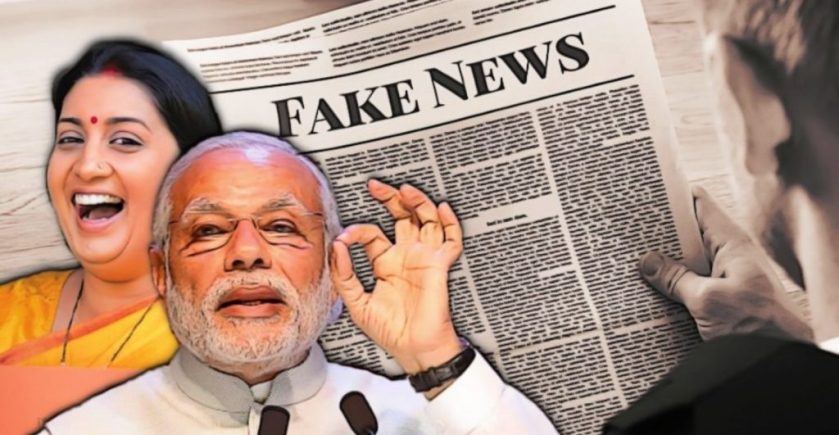
A few weeks earlier, officials in Malaysia affirmed new legislation which declared the spread false news as a crime and violators would be deserving of up to six years in jail. The fake story has turned into a worldwide issue that influences the centre of contemporary data innovation. It has gone from a charge flung amid an American political crusade to a point scoring global political talk.

The most recent couple of years in Pakistan have seen the transient development of phoney media crusades to defame adversaries. The pattern of media melodrama and gossip mongering isn’t new.  The culture of fake news started to bring its revolting head up in Pakistan since the day when the marvels like the doctrine of necessity, good governance, and the emergence of political insurgencies started.

Things got more convoluted when private Media empire extended bigger in the measure, size and impact than conventional government-controlled PTV channels in Pakistan and just a couple of daily papers in the last decades of the twentieth century. The second wave accompanied the appearance of online networking called “social media” in the first decade of the 21st century.

There is nothing new in misleading the general population in different countries through the fake news. It is at times fundamental, at times successful. What is new is the measure of data on the crowd that is accessible, the capacity to Spotify the group of onlookers to more refined degrees, and the opportunity to reach a massive gathering of people requiring little to no effort.

The famous anchor person, Mr Shahid Masood claimed an association of the primary accused person of Zainab Rape and a Murder case with the global network of child pornography. However, Mr Shahid flopped gravely to prove even an iota of his claims which further caused embarrassment and inconvenience for the whole media industry. The incident of fake news did not happen the first time. News coverage is accepted to be the unique calling of disentangling truth by thorough examinations and given confirmation, not through talk, purposeful publicity, and phoney news things.

The expression “fake news” entered American political discourse amid the 2016 electoral race between the two Democrats and Republicans presidential candidates charging each other and the media with creating false news. From that point forward, there have been innumerable stories about how public opinions are controlled for quick political pick up. In Pakistan, the news falsity culture crept into the ethics of reporting in the late fifties and then kept rising with no dive down ever after. Fake news journey saw many fluctuations of cruel time and faced severe jerks of the circumstances but reached its pinnacle and boom in the 21st century.

In Pakistan, the ongoing Intra-media turf wars between the BOL media group versus main leading channels and newspapers including Geo and Jang group is something that unmistakably exposes the inside truth of how media operates and manufactures news. Media owner Mir Shakeel admitted in the top court that he is in the business of “selling the news”. However, news of sale does not bound the news businessmen necessarily to sale truth in the garb of news.

The business of selling or telling truth is the bitterest of all human experiences. While on the contrary, selling lies have been the most lucrative industry with all-time high returns, so believe many traders of sensationalism and popular sensitivities. Pitching against the foe using the counterfeit mechanisms can be more convenient than bringing forth some reliable evidence. A month ago, a counselling firm called Cambridge Analytica obtained Facebook client information and utilised it to endeavour to impact voters in the run-up to the electoral facing off.

The false news could likewise just be called “lying,” something that has been a piece of political culture as far back as there were political societies. In 1940, amid the presidential battle, Franklin Roosevelt said that the United States would not get associated with a European war, even as the U.S. Furthermore, British military authorities were laying in their anticipations about how to wage such a war.

In 1960, Dwight Eisenhower asserted that a climate look into airship was shot down finished Soviet airspace when as a general rule it was a U-2 spy plane. John F. Kennedy charged that the Eisenhower organisation’s carelessness had enabled the Soviets to surge ahead in the number of rockets they made. Was this not valid, as well as Kennedy knew it wasn’t accurate, but he continued to grapple the falsity to damage his opponent politically. That is perhaps the reason that the critiques of democracy in the 21st claim that “the politics is transforming to “the art of lies” from its classical claim of being the “art of liberties”.

Lyndon Johnson, amid the 1964 war, pursued a battle to persuade general society that Barry Goldwater was probably going to begin an atomic war since he was rationally shaky. At that point, Goldwater supporters spread paranoid notions that Johnson had John F. Kennedy killed.

In the similar vein, the British planted a story amid World War I that the Germans were utilising Belgian bodies to make the cleanser. Amid Stalin’s slaughter in the 1930s, Purposeful Soviet publicity persuaded numerous in the West that the Soviet Union was achieving new statures of prosperity.

The Western savvy people like Jean-Paul Sartre, driven by the charisma of Mao in China started to laud what was going on in China and began to wear Mao’s suits to symbolise their help for China. However, this was what they told to their respective societies they believed but as a matter of fact, they were pretending and counterfeiting everything to exert pressure on the regime in power in their home country to get their things done more conveniently and their political demands accepted irresistibly.

Lying on political issues isn’t new, nor is the act of spreading bits of gossip to accomplish certain finishes. So there is nothing new and significant about what’s occurring today in Pakistan and abroad regarding false media propaganda for gains and ratings. It was perhaps the trends of banking upon pure and simple falsity that many reporters multiplied lies with the concocted claims of Dr Shahid and came up with a series of more innovative lies by fictionalising the story of Zainab’s killer to the highest levels of intrigue and conspiracy.

The politics in Pakistan has seen commercialisation through democratisation during recent decades, claim many analysts. Recent years have seen mega data leaks like Panama papers which have caused many new debates to emerge about the human relationship with social institutions, most notably the state and government. The graft scams and compromising national public interests at the altar of personal gains have come out to be one of the leading characteristics of human hybrid personalities in the twenty-first century. Unlike in the past when people had one personality and one identity, the people in the 21st century have more than one faces, characters and figures which get auto-on as per the situation.

The politicians as well as the journalists claim no exemption but are instead proven to be the leaders in developing multiple characters. The hybrid culture of many mirror faces for himself or herself, one face for family, one look for friends and neighbours, one face for general public or society as a whole and other for the international community, was rare few decades and centuries back. Politics has emerged the most lucrative business in both the developing as well as the developed countries. No country can claim exemption to this trend of ethical and political decay of global scale. Pakistan seems to be hard hit by everything no-2 from all aspects of life including massive cheating.

Roosevelt did not require scientific examination to know how to oversee general assessment. It was in his temperament. Lincoln, Roosevelt and Reagan all comprehended general society, and the control of successful conclusion began there. In their circumstances, the leader was personally bound to people in general. So they concentrated reading minds and hearts of the people whereby they could be in a better place to manipulate the masses towards their political ends.

Something that is moderately new is the merger of marketing and decisions. Contemporary selling of items and administrations rose to full power after World War II. Marketing mannerism is not quite the same as publicising, obviously. Publicizing has been around perpetually and is primarily intended to pitch an item to general society. Advertising dismembers the general population into various sections and recognises approaches to approach those fragments and force them to buy an article. Marketing involves ‘persuasion’ while publicising focus of ‘declaration or revelation’. Organizations have done this for quite a while. What showcasing did was convey a level of accuracy to distinguishing suckers and what will persuade them to purchase something that they may not require or even need.

The presentation of advertising philosophies made it conceivable to oversee general sentiment indifferently. Promoting can transform an issue or competitor into a product and shape individuals’ impression of it. While pioneers beforehand created their particular personas, making them more real and along these lines viable, marketing is currently used to configuration pioneers’ personas for them. Genuineness is lost and with it the nature of initiative and excellent specialist over issues. Individuals have dependably been pessimistic on political matters, yet the watchful making of the picture of pioneers and issues has made a level of vulnerability in present-day political life.

The handmaiden of promoting has been publicising and advertising. The objective was to shape important conclusion as well as to form the media that conveyed the news and affected general feeling.  Public Nuisance was a troublesome undertaking. Promoting is amazingly costly and this points of confinement on its utilisation. Forming news stories was considerably harder. Editors controlled the substance, and they were hard to induce on a colossal scale. Also, there were various daily papers and systems, a considerable lot of which were one-sided, yet the predispositions offset.

The absolute most essential normal for online promoting is that it is shoddy and can reach vast quantities of individuals. Hillary Clinton collected large measures of cash. Donald Trump didn’t. He utilised the web strongly while Hillary Clinton concentrated on conventional media. When we take a gander at Cambridge Analytica, we see promoting on steroids – or if nothing else an endeavour at it. Through Facebook, the organisation got information that had a specificity inaccessible to more traditional promoting techniques. It permitted the Trump battle to recognise targets, contact them with particularly successful messages, and have those messages be sent to and seen by a massive number of individuals.

The facts accuracy of digital media is far better than the traditional media. Social media not only reach the massive audience in real time but its dialogue model enables people to converse with the people and know their priorities as well as thought patterns through vast databases of IDs and face recognisers and photograph readers. The domain of artificial intelligence is the golden opportunity for political victory as it enables the political leader to make a fairer assessment of what people like, need, and dream.

Some observe the web or internet has a significant democratising power. In any case, the issue is that the democratising component of the social media was quickly distinguished as an open door for advertisers of products and enterprises and later for politicians. The general population separated into clans assaulted by various sources. Having contrasts of feeling is a piece of a robust majority rule government. However, the distinctions were stark to the point of creating wide gaps among different groups. Division and inequality smashed the political culture of democracy and egalitarian society by exposing the biggest tensions between the democracy and capitalism.

Geopolitical expert Robert Friedman argues that “Many have been obsessed with the increasing costs of political campaigns. But with the rise of internet marketing and social media, this will be less of a concern. The internet has democratised politics. And this is what the founders feared. Its why they created a republic, not a democracy.” The kind of democracy we have in Pakistan is more likely to grow in information anarchy due to the absence of well-thought-out social media policy guidelines and well established regulatory regimes.

The writer is a novelist and senior Police Officer

Doing Enough: Pakistan’s New Security Doctrine

By J. J. Baloch

5a891290dabe0

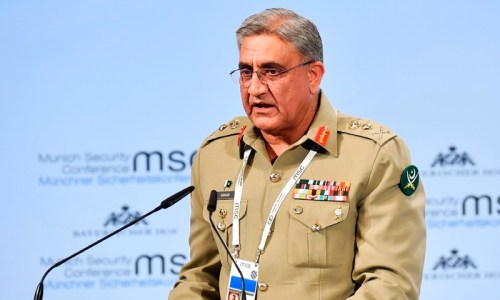
Accusing Pakistan of not doing more, the Trump administration suspended $ 2 billion security assistance to Pakistan in the opening month of current year. While addressing  Munich Security Conference (MSC) 2018 this month, Pakistan’s Chief of Army Staff (COAS) General Qamar Javed Bajwa unfolded the ethos of Pakistan’s new security doctrine. Head of Pakistan’s military took an esteemed stance by making it clear to the world that Pakistan has done enough and the global community needs to do more now. The security analysts at RUSI, UK, referred General’s candid stance as the “Bajwa Doctrine“. The doctrine underscored many elements of Pakistan’s counterterrorism strategy which are highlighted in the following paragraphs.

Roots of Terrorism in Pakistan: Pakistan was a peaceful and progressive country in the 1960s but the 1970s decade proved disastrous for Pakistan as the events like secession of Bangladesh in 1971, followed by the Soviet invasion of Afghanistan and the Islamic revolution in Iran took place in late 1970s. The breakup of Pakistan did not affect our society as deeply as the cataclysmic changes in our neighbouring Muslim countries did! A war was inflicted on us on the grounds of religion and sectarianism; before this, we never knew that as a Muslims we were either Sunnis or Shias.

War made in the USA: With the help of Western free world, our Madrassas became centres of new ideological dozes under the new insertion of the exceptional clause of fighting in self-defence. Pakistan defeated al-Qaeda, Tehreek-e-Taliban,  Bait-ul-Ahrar and other outlawed militant groups. Young Muslims were recruited, radicalized and then disowned when they won a success for us. Many people were empowered with wealth and power and we can’t just whisk them away as we are reaping what we sowed 40 years ago. It is naive to presume that the USA is not alive to this open secret.

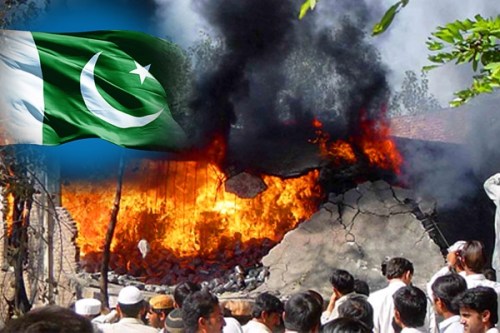
Pakistan’s Sacrifices in War: Pakistan army has waged a bloody and relentless war against terrorism and extremism at the monumental human and material cost. Over 35000 Pakistanis have lost their lives and 48,000 critically wounded and its economic cost exceeds $ 250 billion US dollars. The only fraction of this loss has been shared by our global partners. Though this war has caused colossal damage to our society and statehood, yet it has redefined our resolve and has gone too far in uniting and cementing our nation. Many blocks of ice of isolation, alienation, desolation, violence, corruption, division and dearth are melting now in Pakistan, making the Indus saga fertile with the new spirit of sacrifice, new ideas, new patriotism, new social bonding and new hope.

Terrorism-Pakistan

Terrorist Sanctuaries in Afghanistan:  Terrorists have sanctuaries in Afghanistan, from where attacks are being coordinated against Pakistan. Afghanistan’s instability and internal insecurity hurt Pakistan because it is being used by the terrorists for carrying out their terrorist activities in Pakistan, misusing our hospitality. In 2017 out of 130 terrorist attacks in Pakistan’s areas bordering Afghanistan, 123 were conceived, planned and executed from inside Afghanistan. We do not blame them because we understand the predicament of the Afghan government, but all this is happening despite the presence of our strategic NATO alliance in Afghanistan.

Western Failure in Afghanistan: The causes of the failure of NATO strategy is not the presence of Haqqani network or Afghan Taliban but a pursuit of a wrong strategy that despite spending $ 1.4 trillion US dollars, the situation can best be described as “stalemate”. It is time to look into the causes of NATO failure and make exhaustive audit into the situation instead of the blame game. It is very important for NATO strategists and scenarioists to learn that there is no universal war strategy, that there must be a difference between eliminating terrorists and genocide or territorial conquests. It is really strange for a theorist to develop a framework of such strategy that is designed establish imperialism in the name of building peace or how a peace industry of the West works well in the impeace of Afghanistan where natives are still to understand the real meaning of peace and order.

Importance of Border Fencing: It serves two purposes; it not only prevent criminal elements to enter Pakistan from Afghan side but also deter same from Pakistan side. Pakistan is ready to cooperate for peace and stability in Afghanistan, however, joint efforts by all the countries to eradicate the menace of terrorism are the need of the hour. In this regard, Pakistan has undertaken fencing of its border with Afghanistan and that elimination of terrorism requires global cooperation. Afghanistan and Pakistan are two sovereign nations and have right to development and they must ensure that their soils are not used against each other.

National Action Plan: Pakistan is implementing National Action Plan (NAP), a national counterterrorism strategy under which actions have been taken not only against the terrorists but also against their financiers. Over 1100 Al-Qaida operatives killed in Pakistan and over 600 handed over to the US. Pakistan is instrumental in the war on terror as it has also brought diverse stakeholders on negotiating tables. No organised militant camp exists on Pakistani soil today.

Daesh Element: So far as we have been able to deny any foothold to Daesh (Islamic State) in Pakistan but Daesh militants’ regrouping in Afghanistan is going on and this is the threat for Afghanistan, Pakistan and global community as a whole. However, for time being our claim of Daesh having no foothold may not hold any longer as either political settlement of Islamic state with political regimes or their military defeats may drive them to Afghanistan or Pakistan that could be very challenging for us and we need to prepare for it well in advance.

Afghan Refugee Problem: There are 54 Afghan refugee camps housing 2.7 million Afghan refugees in Pakistan which are the major source of concern for Pakistan and there is the urgent need for their repatriation. Afghan refugee camps need to close now and National Action plan of Pakistan stresses this need. Confusion and indecision at the policy level are one of the many dysfunctions of our institutional approach to implementing National Action Plan provisions which is quite unequivocal in its diction to get Afghan refugees back to their country as Pakistan has done a lot for them.

Misconstructions of Jihadism: The only state can sanction Jihad and the clerics from all schools of thought in Pakistan and elsewhere in the Islamic world have issued a joint decree against terrorism and extremism in the name of religion. “There is no denying of the fact that a powerful concept such as Jihad can be easily misused for propagating extremism and terrorism, particularly as many Muslims world over are not only feeling alienated but disowned, targeted and devoid of positive expression.” “The present jihadism is a misnomer. Jihad is a high award concept that underlines struggle against the tyranny of all types. Muslims are taught that control of self is the most alleviated form of Jihad. There is also saying of the Holy Prophet (PBUH) that the best of Jihad is a word of truth in the face of a tyrant ruler. On the other hand, Qital (fighting) and the aspect of armed Jihad comes at the lowest end of the spectrum of actions and beliefs that comprise the concept of Jihad and can only be sanctioned by a state authority and nobody else.”

Irrelevance of Caliphate in Pakistan: “The concept of the caliphate, which is more of a ‘nostalgic response’, rather than the actual possibility for most Muslims. In Pakistan, the notion of the caliphate has not found any traction.” The indoctrination of our vulnerable youth by Daesh elements on social media and internet cannot be ruled out and we need to ensure our stronger cyber control regimes by adapting to relevant legal measures, policy initiatives and enforcement mechanisms in Pakistan.

Pakistan’s counterterrorism strategy: It is multipronged; it is not confined to military operations but includes generating public opinion against terrorists, placing better policing and prosecution, reforming education, curbing terror finance, controlling hate materials, cultivating religious and scholarly consensus on counter-narrative against terrorism, using media tool for disorienting the moral grounds the terrorists use, involving all stakeholders, offering complete cooperation to partners in war, gathering actionable intelligence and using reconciliatory tools wherever effective to diffuse volatile situations.

Analysing the speech of General Bajwa, Kamal Alam, a security analyst at Royal United Services Institute (RUSI), a leading British think-tank working in defence and international security, maintained “Pakistan has done more than enough to secure neighbouring Afghanistan, and is not intimidated by the threat of US funding cuts. Pakistan army under “Bajwa Doctrine” is biting back hard against threats issued by the American administration and far more confident than it was when the Americans threatened its then President, General Musharraf, to bomb Pakistan into the stone age if it didn’t comply with American demands. Pakistan army is now “battle-hardened after 17 years of war on its western frontier and regular skirmishes on its eastern border” and the world, in the shape of China, Russia, Turkey and Iran, have all come to Pakistan’s defence as America loses influence in Islamabad. Pakistan is now adamant that the time for American threats and directives is over. Days after Trump announced the freezing of aid, Pakistan announced it would trade in the Chinese Yuan, amidst reports that China was getting ready to open a naval base in Pakistan, its second overseas military base after Djibouti.”

pakistan-terrorist-attack

“Our actions are constrained by capacity and not by will. Pakistan has played an instrumental role in destruction and dissemination of Al-Qaida from Afghanistan. The struggle continues but the threat is morphing”, the CAOS said closing his speech.  It is time for tit for tat and Pakistani nation should stand by their both civil as well as military leadership to take the decisions that serve our country’s interests. Enough is enough now.

The writer is the author of “Whiter than White” Novel and a Fellow of London School of Economics. He is a senior police officer at Police Service of Pakistan. 


Whiter than White by J.J. Baloch: Ratings, Reviews, Publicity and Availability

Whiter than White by J. J. Baloch is now available in every corner of the world. The author is receiving requests for its translations in different global languages. 

My Novel Cover Page

1. Russia

https://www.bookvoed.ru/book?id=7333781

2. Netherland

https://www.bol.com/nl/p/whiter-than-white/9200000070795910/?bltg=itm_event%3Dclick%26mmt_id%3D2a54fe0034a4d099%26pg_nm%3Dpdp%26slt_id%3Dprd_reco%26slt_nm%3Dproduct_recommendations%26slt_pos%3DC1%26slt_owner%3Dccs%26itm_type%3Dproduct%26itm_lp%3D5%26itm_id%3D9200000070795910%26itm_role%3Din

3. United States of America

https://www.easons.com/whiter-than-white-j-j-baloch-9781788036641

https://www.amazon.com/Whiter-Than-White-J-Baloch/dp/1788036646

http://www.kmart.com/troubador-publishing-whiter-than-white-author-j/p-SPM14588707415

https://www.scribd.com/book/341068954/Whiter-Than-White-The-daughter-of-the-Land-of-Pure

4. United Kingdom  

eBay wordery

https://www.ebay.ie/itm/Whiter-Than-White-The-Daughter-of-the-Land-of-Pure-by-Troubador-Publishing-/302269742231?hash=item4660ae3c97

http://www.troubador.co.uk/book_info.asp?bookid=4310

https://picclick.co.uk/Whiter-Than-White-by-J-J-BAloch-New-192310965620.html

https://www.thebookpeople.co.uk/webapp/wcs/stores/servlet/qs_searchResult_tbp?searchTerm=whiter+than+white+by+JJ+baloch&catalogId=10051&langId=100&storeId=10001

5. Canada –

Indigo/ Rakuten Kobo

https://www.chapters.indigo.ca/en-ca/books/whiter-than-white/9781788036641-item.html

https://www.kobo.com/ww/en/ebook/whiter-than-white-2

6. Belgium and Luxemburg

http://www.standaardboekhandel.be/seo/nl/boeken/literaire-fictie/9781788036641/j-j-baloch/whiter-than-white

7. Germany

https://www.zvab.com/products/isbn/9781788036641/22351646593

https://www.jpc.de/jpcng/books/detail/-/art/j-j-baloch-whiter-than-white/hnum/6604749

https://www.buecher.de/shop/belletristik/whiter-than-white-ebook-epub/baloch-j-j-/products_products/detail/prod_id/47906101/

Whiter Than White

http://de.zogshop.com/product/YW16X0IwNlhHMkYyUDM/catalog/whiter-than-white-the-daughter-of-the-land-of-pure-english-edition?f=33F52711-9092-3187-6D57-A3C21B3DE135

8. Spain

https://www.iberlibro.com/servlet/BookDetailsPL?bi=22312753097&searchurl=sortby%3D17%26an%3Dbaloch&cm_sp=snippet-_-srp1-_-title3

9. Denmark

https://boekentips.com/boek/9200000070795910/whiter-than-white

10. Sweden

https://www.akademibokhandeln.se/bok/whiter-than-white-the-daughter-of-the-land-of-pure/9781788036641/

11. Norway

https://www.adlibris.com/fi/kirja/whiter-than-white-9781788036641

12. Estonia

https://www.rahvaraamat.ee/p/whiter-than-white/853914/en?isbn=9781788036641

13. Italy

http://www.abebooks.it/servlet/BookDetailsPL?bi=22312753097&searchurl=sortby%3D17%26an%3Dbaloch&cm_sp=snippet-_-srp1-_-title3

14. New Zealand

https://www.fishpond.co.nz/Books/Whiter-Than-White-J-J-Baloch/9781788036641

15. Australia

at wounded women book and booktopia.au

https://www.fishpond.com.au/c/Books/q/The+Wounded+Woman+Books+whiter+than+white+by+J.J+Baloch?rid=1443094903

https://www.dymocks.com.au/book/whiter-than-white-by-baloch-j-j-9781788032377/#.WjAhdlWnHIU

https://www.booktopia.com.au/whiter-than-white-j-j-baloch/prod9781788036641.html

16. Pakistan

Paramount Books

http://paramountbooks.com.pk/loginindex.asp?title=WHITER-THAN-WHITE%3A-THE-DAUGHTER-OF-THE-LAND-OF-PURE-%28pb%29-2017&isbn=9789697634026&opt=3&SubCat=05&Cat=05009

Reviews

http://blogs.trendolizer.com/2017/11/whiter-than-white-a-book-review.html

http://thatsbooks.blogspot.com/search?q=JJ+Baloch

18301823_858966807577733_3045059845201807675_n


The Broken Windows Policing

J.J. Baloch

broken-windows

The Economist, January 27th, 2015, captions Broken Window Policing as “Cracking down on minor crimes are thought to prevent major ones”. The article further describes:

“The term ‘broken windows’ refers to an observation made in the early 1980s by Mr Kelling, a criminologist, and James Wilson, a social scientist, that when a building window is broken and left unrepaired, the rest of the windows will soon be broken too. An unrepaired broken window is a signal that no one cares, they argued, and so breaking more windows costs nothing. More profoundly, they found that in environments where disorderly behaviour goes unchecked—where prostitutes visibly ply their trade or beggars accost passers-by—more serious street crime flourishes. This theory is supported by a number of randomized experiments. Researchers at the University of Groningen in the Netherlands, for example, found that people were twice as likely to steal an envelope filled with money if it was sticking out of a mailbox covered in graffiti. What this means for law enforcement, Messrs Kelling and Wilson prescribed, is that when police officers keep streets orderly and punish even small signs of misbehaviour with a warning or an arrest, people will behave in a more orderly way”.

The surge in urban crime gave birth to zero tolerance on crime and on the causes of crime so describes the Economist report.

“When the “broken windows” theory was first published, urban crime was a seemingly uncontainable problem in America and around the world. But in the past two decades crime has fallen at an extraordinary rate. This change has been especially profound in New York City, where the murder rate dropped from 26.5 per 100,000 people in 1993 to 3.3 per 100,000 in 2013—lower than the national average. Plenty of theories have been concocted to explain this drop, but the city’s decision to take minor crimes seriously certainly played a part. While Mr Bratton was head of New York’s transit police in 1990, he ordered his officers to arrest as many turnstile-jumpers as possible. They found that one in seven arrested was wanted for other crimes and that one in 20 carried a knife, gun or another weapon. Within a year, subway crime had fallen by 30%. In 1994 Rudy Giuliani, who had been elected New York’s mayor after promising to clean up the city’s streets, appointed Mr Bratton as head of the NYPD. Scaling up the lessons from the subway, Mr Bratton found that cracking down on misdemeanour offences, such as illegal gun possession, reduced opportunities for crime. In four years, the city saw about two fewer shootings per day…“Broken windows”-style policing has arguably helped to reduce crime. But other factors have also helped”.

This model was first adopted by the New York Mayor, Rudolph Giuliani, who was criticized for police killings of citizens. Broken window policing is used interchangeably with zero tolerance policing, implying the core belief that for controlling major and serious crimes like terrorism, serial killings, and street crimes, it is very essential to crack down on very minor crimes, the negligence of which leads to social non-conformity. This model emphasises on minor violations and their impunity cause bigger crisis and anarchy.

The police can play a key role in disrupting this process. If they focus in on disorder and less serious crime in neighbourhoods that have not yet been overtaken by serious crime, they can help reduce fear and resident withdrawal. Promoting higher levels of informal social control will help residents themselves take control of their neighbourhood and prevent serious crime from infiltrating. A recent systematic review by Braga, Welsh and Schnell (2015) found that policing strategies focused on disorder overall had a statistically significant, modest impact on reducing all types of crime. Not all of the interventions included in the Braga et al. (2015) review, however, are true tests of broken windows theory. Indeed, the broken windows model as applied to policing has been difficult to evaluate for a number of reasons.

First, agencies have applied broken windows policing in a variety of ways. A second concern is how to properly measure broken windows treatment. The most frequent indicator of broken windows policing has been misdemeanour arrests, in part because these data are readily available. Arrests alone, however, do not fully capture an approach that Kelling and Coles (1996) describe as explicitly involving community outreach and officer discretion. Third, the broken windows model suggests a long-term indirect link between disorder enforcement and a reduction in serious crime and so existing evaluations may not be appropriately evaluating broken windows interventions. Fourth, there is much debate over the impact of New York policing tactics on reductions in crime and disorder in the 1990s. Broken windows policing alone did not bring down the crime rates (Eck & Maguire, 2000), but it is also likely that the police played some role. Fifth, there is concern that any effectiveness of broken windows policing in reducing crime (where the evidence, as noted above, is mixed) may come at the expense of reduced citizen satisfaction and damage to citizen perceptions of the legitimacy of police.

Finally, there is also no consensus on the existence of a link between disorder and crime, and how to properly measure such a link if it does indeed exist. For example, Skogan’s (1990) research in six cities did suggest a relationship between disorder and later serious crime, but Harcourt (2001) suggested in a re-analysis of Skogan’s (1990) data that there was no significant relationship between disorder and serious crime. Hence, there is no clear answer as to the link between crime and disorder and whether existing research supports or refutes broken windows theory.

In Pakistan, we have seen this school of thought for zero tolerance policing which have been very touchy on minor violations or what we call civil or non-police matters that lead to tribal and community bloodsheds. It is famous saying in Pakistan that three things, which are civil in nature, cause all kinds of crimes include, Monetary issues, family honour taboos, and land disputes- the areas or the matters where the police are not to take direct cognizance as per the law in vogue. Such policing models have been adopted by Khyber-Pakhtoonkha province by establishing “Dispute Resolution Committees-DRCs” on the district level for resolving conflicts of civil and private nature so that they may not lead to some serious issues of social order and peace in the society. We don’t have statistical data to assess their impacts but they are generally believed to be very effective in resolving the conflicts and irritants.

Besides this, Police in Pakistan has been very active in getting disputes settled outside the court due to prolonged delays in court decisions. Very interestingly, 21st century Pakistan has witnessed an upsurge in Police encounters with criminals and also rise in police target killings. As a final consequence of all this deadly showdown and police loss of manpower and public reactions, crime and violence have remarkably reduced in Pakistan owing to zero tolerance measures taken by the police in the aftermath of National Action Plan and its implementation.

Picture1 (1)

Now a day, much focus is being put on predictive policing and law enforcement efforts aimed at discouraging and fighting all those factors and causes that lead to violence and crime. However, the broken window policing is somehow losing because it gets police engaged into unnecessary non-cognizable offences that are not always prone to result in bigger crimes; so many fear that empowering police with jingoism and naked authority would earn bad name for the police department  already having the track record of tainted reputation and maligned public image.

The Writer is a scholar, an educator, a novelist and a senior cop at Police Service of Pakistan…


Ethical Dilemma of Postmodern State

By J. J. Baloch

ʎɐʍ ƃuoɹʍ

The postmodern state devalues human life in the name of preserving it, a very tragic trend that amounts to giving a killing medicine to an ailing patient by a doctor in the name of curing his or her disease.

The question as to how to fight terrorism outweighs the reasons as for why to fight it. Governments worldwide face greater pressures and public wrath for the ways they employ to fight terrorism than the terrorists for their acts of barbarism perpetrated on their opponents. It is perhaps so because the governments are supposed to show more responsibility, care, caution, and professionalism while using force and resources in countering terrorism than the irresponsible, careless, mindless and indiscriminate behaviour of the outlaws. The law enforcement efforts to curb terrorism impatiently results in the violation of Human rights which many civilized souls believe is criminal by all means.

Unlike some cultural aspects that are relative, violations of innocent people’s physical integrity, such as dropping bombs on them should be universally deviant and universally criminal. When the nations of the world begin to focus their power and resources on protecting and preserving human life rather than taking it, we will see the first true efforts being made to counter terrorism.

The modern civilization, despite its tall claims, is yet developing into a state where the so-called civilized mankind could be able to say terrorism is terrorism no matter who commits it against whom and why. What is better for the goose must be better for the gander. If freedoms and civil liberties are so dear to the Americans why it would not be dear to the Africans, Asians, or any other races or nations. Why we think that dictatorships are good for the Middle East and Africa since we, being civilized, have been in war with governments of the time for denying us our rights in the name of greater good and now in the name of counterterrorism.

The champions of human rights have been the champions of throwing nuclear bombs and raining drones on the innocent populations. Who would and who should really call anyone using violence for whatever reason terrorists? Why the elements of justice are not equal to elements of order and peace? Why the monopoly on violence rests with the state even if it turns to be the industry of violence or even if it becomes the agent of chaos and anarchism? Why citizens accept the state and its authority as legitimate since it seems to have lost the soul of establishing peace and order and no more remains the source of protection to human beings amidst hollow claims of the welfare of the humanity through so-called “world order”. Where the selective values of modern civilization in the garb of democracy and the rule of law put the blatant violations of human rights going on under their very nose? How strategic and economic interests of big brothers and so-called veto powers can guide them to go human, humane and humanitarian.

tech-dilemma-1

The postmodern world appears to be in a serious ethical dilemma of how the wrong can bring the right and how far it stands right to establish right. Why don’t we think what is better for our own people, living within the premises of our own devised systems, is equally better for all those living outside? How long humanity could bear the brunt of “theirs, yours, others etc” since its soul reflects only “ours”. If we commit the violence, we feel it is in so-called self-defense; but if they commit violence forwarding the same streak of logic, common sense and rationale we are hell-bent on declaring it violation, violence, and offence. The way we are divided; the way we are selfish; the way we are we nurture our notions of being humans; the way we get into the winning games of power and pelf and the way we are roped into groups speak volumes of our withering “ourness” and our dying inhumanity. If one percent or less population among us is criminal or involved in spreading violence and mischief that does never sanction that state to spread violence against already victim 99% population living within or outside the territorial jurisdiction of that particular state. Similarly, this argument does never mean to exempt or protect or justify the inhuman actions committed by the criminal or terrorists.

The leading claimant of human integrity and self-esteem, democracy goes down the drain of the inequality inherent in its accomplice “capitalism”. Modern civilization’s biggest of all tensions is to work out the built-in tensions between democracy and capitalism and also tensions between socialist states and their human rights conditions. The ideological irregularities causing human conflicts is still true with what has been witnessed as the systematic growth of warfare that knows no ending and no winning but continuing and losing by all involved whether directly or indirectly.

My request to the greatest of all politicos in the post-modern world is to think beyond democracy which should not be considered the full stop in the process of the growth of human consciousness about their being the super creature. The most fundamental tension of democracy appears to be getting too older by now to address the issue of inclusiveness in a proper fashion. Even if we take the example of world-leading as well as largest democracies, we would very tragically find that on average the flawed electoral systems produce no majority governments but rather the governments of the handful of some influential and resourceful people whether it is the United States or India or any other democracy.

If you don’t buy my argument, take your calculator and start counting and calculating the total votes registered, total votes casted, total votes obtained by the wining party, that would be forming the government, in terms of total population living within that territorial jurisdictions or electoral constituencies, even in the most idealist conditions you would find that the winning political party might not have secured the support and votes of more than the 30% of their total population but since it secures greater votes in terms of vote cast, it forms the government. As a matter of fact, I can’t call such government, representing the handful of people, as a majority rule or truly representative government.

341a1ad

As a consequence of the non-inclusive systems of governance and its resultant economic impacts, the inequality, poverty, lack of education, religious persecution, radicalism, economic turmoil, social suppression, and oppression of refined liberties and freedoms, especially of minorities, sow the seeds of terrorism, and thus counter-terrorism. Both the terrorism and the counterterrorism have proven the death knell to the legitimacy of the state in modern times. The most commonly utilized counter-terrorism tactics, such as extrajudicial killings, torture, forced disappearances, and political imprisonment is, in fact, themselves acts of terror. To terrorize in the name of combating terrorism is ironically hypocritical, self-contradictory and hence self-defeating. When counter-terrorists use the tactics of terrorists in order to counter terror, they descend to their moral level and just add more terror to the world. And if that were not enough, when counter-terrorists terrorize people, they generate more terrorists.

Great critic of modern times, Noam Chomsky states: “counter-terrorism is terrorism by another name”. We must counter counter-terrorism, in order to uphold human rights and give weight, resources, and priority to it. Military, police and clandestine agencies unilaterally function from a consequentialist point of view, with a modus operandi that denotes that their goals, professedly productive, be accomplished by any means necessary, even if those means are themselves directly counterproductive. Gone are the days when ends justified the means and hardly anyone should justify their criminal acts in name of establishing peace.

Rather than countering terrorism, the governments of the day should work collectively and implement new domestic and foreign “right-based” policies that adhere to the dignity and integrity of their citizens and also the citizens of their fellow states who are their partners in peace, not their allies in war. There is much beyond military, police, and other punitive actions to restore the ailing elements within the humanity and society. The best ways to fight terrorism are the non-violent means.

The modern politics get into the ethical dilemma when it begins to terrorize the innocent and non-combatant people in the name of countering terrorism. Therefore, let us shut down the counterterrorist show that places more restrictions on citizen’s freedoms and takes more lives annually than the ghost of terrorism because there is no greater right than the right to life.

The writer is a policing educator, novelist,  author and DIG at Police Service of Pakistan… 


Whiter than White: A Book Review

Reviewed By: Faahid Shoukat Ali

my-novel-cover-page

It was just by chance that I happened to come across J. J. Baloch’s novel Whiter than White at one of the posh bookshops (Liberty Books) of Karachi. Its revealing title page attracted me in the first place and then I hurriedly skimmed through the novel, to get an idea about its theme. I admit that once I started reading the novel, I could not take it off my mind for a moment (even during the time when I was not reading it) and finished it in just two days’ time.   

2. Whiter than White is a scathing criticism of the gender bias against women that is firmly entrenched in our culture, traditions, policing, jailing and criminal justice system. The writer, a senior police officer of sterling professional credentials, has got to the heart of the reality and exposed the seamy side of the system that treats woman nothing more than an article of daily use. J J Baloch has created a very powerful novel out of what sounds like a mundane theme. His graphics and captivating depiction of the routines and realities of our life reminds the reader of the tradition of realism in modern British drama that started with John Osborne’s famous play Look Back in Anger, which was staged on 8th May 1956 in London’s Broadway Theatre for the first time. No reader can miss the pronounced tinge of verisimilitude that pervades the novel from beginning to the end. 

3. Hoor, the heroine of the novel, suffers immensely at the hands of the inherently hostile system and its cruel custodians. And the result is a heart-curdling tale of trials and tribulations. She is a frail person, but only in terms of her physique. By no means does she give an impression of frailty in the sense in which Shakespeare meant it in his frequently quoted phrase in Hamlet – “Frailty, thy name is woman”. Shakespeare’s hero laments feebleness of female character in the context of his mother’s involvement in the killing of his father in a bloody display of power politics. Clearly, Shakespeare’s idea of frailty, in the context of Hamlet, is pretty inclusive: it includes not only the lack of physical strength that women folk are heir to but also the weakness of moral and psychological nature as well. However, J. J. Baloch’s heroine presents a complete contrast to the Shakespearean depiction of

4. woman in Hamlet. Hoor is beautiful in the body as well as in soul in the best of proportions. Her beauty of body and soul is very well supplemented by the immense courage and God-gifted mental strength. All these components combine together into an exquisite whole, to enable her to conquer everyone she comes across: she is the embodiment of Truth, in the sense that John Keats describes it – “Beauty is Truth, Truth Beauty.” Her valiant character comes to her rescue quite often during the novel. However, besides adding spice to the story, the novelist has used all these events and incidents (displaying her courage) as a characterisation technique. She is even more courageous than Jibraan Khan, the great feminist writer and women rights activist who not only fights successfully for Hoor’s release and introduces her to the world at large but also marries her. For example, when she and her newly-wedded husband are on the plane to flee the country with a view to avoiding life threat received from a terrorist outfit, she does not mince words and tells him categorically: “Don’t you think we are cowards, who are leaving their homeland to escape death which could catch us anywhere anytime, even on this plane? Do we presume that a miracle will happen in our country and angels will descend from above to bring our country back on track? Thus, even death cannot deter her from the principled stance she has on priorities in life.

5. Whiter than White also carries a message, like most world-class pieces of literature, do – for example, nearly every novel written in the 18th century in England entails a message. J J Baloch does identify a serious social malaise of our society (that is, gender bias against women) but he does not leave the reader in a state of helplessness and despondency: instead, he also suggests, with the subtle touch of a great artist, the solution to that problem. And, interestingly, the solution, in essence, lies within the women discriminated against: they need to know their strengths by continuous introspection and prepare themselves mentally to face even the worst moments in life and retain their innocence in all situations and at all cost. Alexander Pope, the famous 18th century English poet, succinctly puts this phenomenon as “Know thyself” in one of his universally remembered poems. Clearly, Hoor has risen in life owing to self-knowledge and recognition of her strength as a woman through continuous soul searching. If other women measure knee-high to Hoor in terms of introspection, self-knowledge, courage, mental toughness and strength (albeit a Herculean task in the context of our social milieu) their woes would not take long to vanish.

 6. Whiter than White is the superb exhibition of J. J. Baloch’s art of characterisation. He has used a couple of popular literary techniques to reach the innermost recesses of his characters. One can literally feel the heroine walking across the pages of the novel, situation after situation. Soliloquy is the principal literary technique that the novelist has used to put the inner selves of his character in front of the reader. Hoor’s soliloquies lay bare, shade by shade and layer by layer, the hypocrisies that afflict our society and its “man-made system”, as the novelist puts it frequently. This is reminiscent of Hamlet’s famous soliloquies: Hoor and Hamlet bear striking resemblance in that. Symbolism is the other literary technique that the novelist has employed for portrayal of his characters. The title of the novel, for example, symbolises innocence, flawlessness and perfection. It explains all that Hoor stands for, as Jibraan Khan explains: “Whiter than White is an English idiom or idiomatic expression which is used as an adjective and which means innocent, clean, flawless, perfect and pure.”  This symbol looms large all over the novel. In another context, the jail doctor says “I believe and have studied that more than 60% of inmates who are sent to jail are whiter than white and are victimised by our own follies.” Even lesser characters such as Meeral, the villain, and Rohi, the rich and powerful lady whom Hoor befriends during short sojourn of the former in jail and who orchestrates Hoor’s early exit from jail receive quite a bit of J J Baloch’s attention in terms of characterisation. 

7. All in all, Whiter than White is J. J. Baloch’s magnum opus that not only portrays the plight and pain of the disadvantaged woman of the Pakistan of our times but also suggests a way forward to her out of this apparent impasse. And it may well be a great idea to render the novel into a film, to get J J Baloch’s message far and wide. 

The writer is a graduate of Warwick Business School and currently, serves in the Federal Investigation Agency. He can be reached at faahidali@gmail.com.