Hunting the Freedom

J. J. Baloch

HUNT-THE-TRUTH

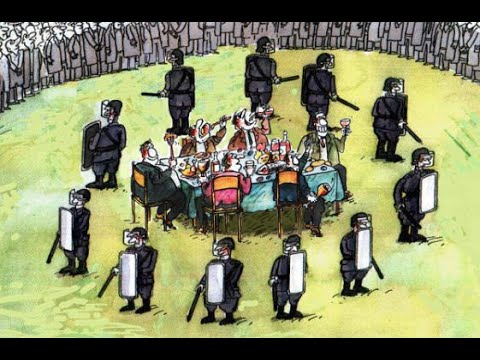
The strong elitist culture of governance continues to hunt the freedoms of the general masses in Pakistan. The political freedom-hunt has a long history in sub-continent which began before our birth as a nation.  The power mafia has grown to unimaginable levels of monstrosity and still struggles hard to drag the nation into the traumatic past. So much so that in Pakistan today the packing of the vested interest groups has become one of the daunting challenges to the protectors of freedom to take their motherland out of the shadows of the past rotten in colonial and authoritarian legacy.

Governance faces grave challenges in 21st century. Communities living in a highly connected globalised world wherein the democracy, as being the best system of governance claiming its faith in the human capacity to rule themselves, is under serious attack of being a failure in addressing the core issue of socio-political and economic non-inclusion. The third world countries, especially Pakistan, are yet to reassemble its parts of politics and power structure on democratic lines.

However, specificity of particular contexts in creating gaps of accessibility as well as the participation of all and sundry in making their fairer choices for dignity, privacy, integrity, liberty and prosperity unveils unique formations, dispensations, and equations of the power balances and so is the case with the perspective of Pakistan’s political landscape.

An autopsy of our statutory structure in Pakistan reveals in an unmistakable way the long list of genetic defects in political structure of Pakistan that go unattended to cause the chronic diseases of injustices, disorder, crime, extremism, public uncertainty and anarchy, rolling the sheets of the rule of law and public peace and haunting everyone including the public, media, academia, and public policy stakeholders in our country.

The form and structure of the state and the modes of its governance always reflect the essence of society’s culture. However, the human culture is the most ancient and the most powerful influence on human thinking about the perspectives of living and is the moving spirit behind the civilisation. The fundamental fault-lines in our society’s power structure as well as in the formations of our multi cultures continue to trouble the development of the system of good governance in Pakistan.

The elitist power structure is the core issue in addressing the very fundamental irritants in our political structure and governance culture which is lampooning in the power and nuisance game of all those feudal mindsets who wish to make their fortunes out of the weaknesses as well as the strengths of the writ of the power in Pakistan.
0

“The control over the power structure in Pakistan has consistently passed into the hands of politicians with a feudal mentality, aided by civilian and non-civilian bureaucracy”, aptly says Syed Mohib Asad, a retired inspector general of police. In aid to politicians stand the religious groups and business tycoons thumping their chest for doing anything to secure their positions in power structure of our society.

The problem of elitist dominance in power structure dates back to Muslim rule in India. Babar Ayaz a veteran journalist is of the view that ‘these are those elites who had been eyes and ears of Muslim rulers in India and who had made their fortunes by serving to their masters in the shape of getting big landholdings and best education (In the Persian Language) for their off-springs’.

The descendants of the Persian-speaking educated gentry passed on to British colonialists in India where they reorganised themselves and regrouped under the shadow of Aligarh class of English-speaking gentlemen who again not only got closer to British rulers but also crafted a new narrative, using Islam as their political identity and way of life only to work out their best interests by jumping into the bandwagon of English people and distracting from their brothers in belief who were general masses and who responded their call for unity, so claims Babar Ayaz, an intrepid Journalist in his marvellous book (2013), “What is Wrong with Pakistan”.

The Muslim elites in India convinced even Jinnah who was the Ambassador of Unity in India for Muslim separatism, genuinely fearing the Hindu mentality which was set on the mode of settling scores with the Muslims for having been under their subjugation for more than six centuries. Babar writes that when in 1936 elections All India Muslim League suffered defeat, Allama Iqbal wrote a letter to Jinnah in which he referred Muslim League defeat to its being away from general masses and also it’s wearing the brand of traditional conservative Islam.

cwmillsRGB-1zppq1j

Hardly anyone can doubt the genuineness of the demands of Pakistan as a country to escape Hindu nefarious designs yet the issue of Pakistan’s being rotten at the core of its national base is with the claims and controls of this Muslim privileged elite of India who spread all our Pakistan after its creation to establish their feudal fiefs and made entries into league to control the properties, sources of income and production, and political power.

As a result, our independence from British Raj transmitted to our subjection to our own elite Raj which still continues uninterrupted and the common man in Pakistan is still sweating for rights and freedoms. After their Muslim Identity, these elites have taken shelter under the shadow of democracy-a business of general masses- which is being traded among the elitist of this country and which is yet to attain popular roots in the forms of the empowerment of the most underprivileged classes and which is yet to allow middle class, a spinal cord of any nation, in our country.

These elites as written by Syed Mohib Asad being hand in glow with power brokers on the horseback continue eat into the vitals of a free democratic Pakistan but rather making fortunes in the business of politics and governance, dominating and monopolizing national narrative, discourse, policy and source of income as well as power within the state apparatus.

Political Interference for consolidation of elitist interests in public domain and departments especially political, economic and criminal justice institutions goes unabated. In Pakistan, the entire governance system has been adversely affected by politically motivated policies and practice designed to weaken its structure. Those who maintain the integrity and resist tooth and nail to deny dancing to the tunes of politicians and all others who one way or the other matter in the power structure in Pakistan are either transferred or removed from the service through engineered allegations and concocted departmental enquiries. The rule of law and true democratic ideals are yet to make their way to dent the iron sheets of elitist culture in Pakistan.

Besides this, the environment of serious mistrust within the government institutions is the primary trouble that exists at the heart of governance in Pakistan. Politicians consider our armed forces as their rivals and cast serious doubts on our superior judiciary for their meritorious and unsparing approaches in the matters of national and public importance. While our military establishment has serious national security concerns and does not trust politicians as the cleanest, trustworthy and reliable to be left completely independent to deal with the issues of national security on their own. So, as the guardians of national integrity, and ideological frontiers, our establishment keep on watching all those at the helm of affairs. This is what Pakistanis have witnessed in yester years. As a consequence, Pakistan does not have any good precedence of cordial civil-military relations which, too, is one of the genetic issues of our polity. However, either military or politicians are in power but general masses still stand alienated and segregated from their rights to have rights as citizens of Pakistan.

Therefore, the people of Pakistan are yet to matter in the power structure of Pakistan. They got independence from their foreign masters but they are still struggling to stand free in making their political choices. Elitist-clone governance is the leading and fundamental genetic problem in Pakistan which has taken deep roots and which is yet to be done away with!

The writer is a policing educator and a novelist.

“We” Versus “They”

J. J. Baloch

Humans-Planet-Decay-Growth

All humans belong to one ancestry of humanity. Basics of life are common in them. All take birth. All die. All live on same one planet earth. All live their life in accordance with certain principles limiting their lives for sustenance and survival. This is but natural, acceptable and understandable for all. This is what they are destined-origin and the destination is the same and the one. But despite being the same, why all have never ever been the one? Why are they divided into “we” and “they”?

Very pestering question for human beings all along has been knowing and understanding as to whether the divisions on the basis of race, colour, creed, gender, caste, age, region, wealth and culture are natural or artificial. Are these divisions inevitable? Can humans live without divisions? Can we not sustain life on our just being humans? What strength and power come from our being Arabs and non-Arabs or for that matter Aryans and Dravidians, or White and Black or Man and Women or Eastern or Western? What kind of pride is this which forces us to stay blatantly divided?

We as humans are told very interesting stories of our not being only humans. The builders of the cage called society make us believe in shallow senses of being beautiful, wealthy, elite, superior, martial, ruler and the master. Silver spoon brands nurture the tales of elitist births and royal grooming. While the slaves of reason construct their narratives of self-making. Strangely, the victims of the ignorance advocate their innocence. However, the have-nots mourn the pangs of their poverty.

The disadvantage of any kind is ascribed to destiny while the advantage is credited to the system which human mind and wisdom produce. The unseen controls destiny. The seen one claims the controls of the system. Unseen is blamed for injustices, inequalities, disparities, incapacities, and all disadvantages beyond human control. Who is born where in what conditions and what belonging is the game is said to be the game of unseen while what someone achieves in the world is attached wisdom and work.

Who blames whom and why is something humans have failed to determine perhaps because of the human limitations. Their artificial divisions and their conflicts on the basis of their divisions, they kill, destroy, devastate, disturb and make their life on earth a hell. They kill not for equality, justice, and peace that all should share equally but they do all this to sharpen and deepen the divisions on a different basis. They kill their fellow beings for land, money, pseudo honours, pitiable pride, annoying arrogance, virulent vengeance, aggrandisement, projection, publicity, promotion, and so on.

Humans keep conflicting and fighting. All humans systems have outlived to stop any kind of human fight for things that actually belongs to none nor yet anyone takes anything when he or she leaves this mortal world. Science and Art are yet to guess the level of human greed. Human culture is hoodwinked by the human desire for recognition and fame. Reason blocks emotions. Power enchains conscience. Desires zip truth. Criminality overpowers humanity and devil invites evil. Life becomes a hell.

Life value starts varying on different grounds; it no more remains equally valuable. The global refugee crisis in the wake of insurgencies and wars is a glaring example of how humans treat humans in trouble. Your problem is yours and my progress is mine; they cannot be exchanged in the name of humanity. Your sufferings are justified because you are you and not from us. We write for us, not for you. We are right in our own right. you are wrong because of your own wrongs not because of my rights or my wrongs. You are you and I am me.

Your words are not my words. My voice is not your voice.  Your tone matches not my tone.  We convert you into bones because we are power-clone and you are poverty drone. We will not even offer you what we think is our own.

Humans appear to have never lived in peace. The system they have developed has been very taxing on humanity. The eternal wars of destiny and systems have destroyed everything human on earth. Even human discourse has become very inhuman. Literature and philosophies are yet to take a leave from the circles of the system they are produced and they have produced in. The architects of destiny pity on the claims of the system which is the product of human mind, ideas and cultures.

However, this virtual war of the system with destiny is still to be over, the human life keeps crawling its worldly ways. In modern times what sharpens the differences between “we” and “they” is the same old struggle for power and pelf which is bound to continue until the universe faces the big bang.

The bitterest of all tastes or cruellest of all tests of human civilisation remains to get rid of “we” and “they” mindsets. The success of anything whether a team, a firm, an organisation, or an institution cultivating the unity on whatsoever grounds of common interests could save all members of that particular group of people from falling apart and from getting ruined. If we as humans have failed to remain human, at least we can retain as robots of the uniform system under one rule working with unity to achieve common ends.

Let us be The one as we are the same humans. We are with same faculties, same features, same origin, same destination. Only different interests and different ways of living on the basis of culture, creed, and geography should not blur our vision of humanity. Togetherness is the answer to our all questions. United we stand, divided we fall. We are perhaps the fallen ones. Only the feeling of “we are we” can save us and retain us what we are in the literal as well as the figural senses of our superlative value of being humans well welded in the eternal union of humanity.

Democracy in the Age of Text-messaging

J. J. Baloch

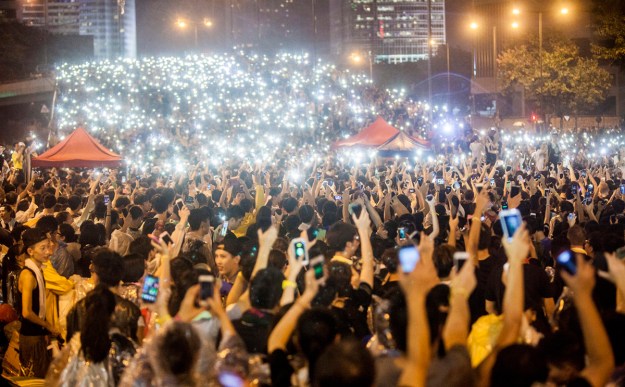
Hong Kong sees third day of massive civil resistance pro-democracy movement Occupy Central

‘Demos’ (people) grow demons in the age of digital communications. Among all the freedoms, freedom to express one’s point of view play big in infusing soul in what we have come to understand a democratic system. Modern political thought believes that democracy is the only system that recognises human ability to rule himself or herself.

Nothing claims a better mechanism for the expression of one’s will and opinion than the social media networks i.e. Facebook, Twitter, Whatsapp, Snapchat, Google, YouTube, and similar other networks do! The social media offers greater access to the people and evokes a quick response of the state in times when the common man finds himself in the state of emergency whether natural or man-made.

The technology claims to have made greater inroads in the public sphere, causing a remarkable social and political change. The spinal cord of technology in moulding and welding socio-political equations has been its power of public connectivity from the platforms of social networks. In many cases, the connectivity of this type has the ability to escape governmental interventions and controls also. It has grown a technology beyond borders.

Many political analysts see this phenomenon of social connectivity as a catalyst for political change and hence many political parties worldwide work exclusively on such free networks to organise their propaganda, publicity, promotions, and electioneering, making minds and changing opinions in their own favours.

Clay Shirky, a scholar of the technology of socio-political change writes in the January, February issue of Science and Technology Magazine in these words, “As the communications landscape gets denser, more complex, and more participatory, the networked population is gaining greater access to information, more opportunities to engage in public speech, and an enhanced ability to undertake collective action.” In the political arena, these increased freedoms can help loosely coordinated public’s demand change.

In recent history, many countries have witnessed a remarkable rise of social media communications which significantly painted change in the political arena of those countries. These much debated scenarios of people going social and free on expressing themselves and getting together under one point of view have made very vibrant appearances since the beginning of 21st century from Manila Philippines 2001 removing the corrupt President Joseph Estrada of Philippine by gathering millions of people at Epifanio de Los Santos Avenue of Manila city a major crossroads in Manila through forwarded text messages reading, “Go to Estrada. Wear black.” This was the first political change caused by social media connecting the people. Removed president of Philippine himself admitted the power of text messages by calling demonstrators as the “generation of text-messaging.

bratislava-protest-e1440104606464

This was followed by many similar incidents of text messages, writing the political change in many parts of the world. The examples of such significant political changes and influences include: The Arab springs in many Arabian countries of Middle East as well as North Africa in 2011, Obama presidential campaigns in 2008 and 2012, Trump’s miraculous winning of presidential elections 2016, Erdogan’s protection of Turkish democracy against bloody military coup by mobilizing masses through social media (Emo Call) in 2016, public agitations against their political leaderships in many Iceland, United Kingdom, Pakistan, India, and many other countries after Panama corruption scandal dictating resignations in many cases, and trump’s Muslim ban. There have been many more examples of how social media dictates political change.

Political scientists, as well as the media experts, are exploring the relationship between the social media opinion generation, community engagement and political change by conducting many surveys and studies in voting patterns, canvassing mechanisms, electioneering, public outreach and the time people spend on social media for connectivity, news, and political participation. Many academic types of research confirm that “people who consume more news media have a greater probability of being civically and politically engaged across a variety of measures. In an era when the public’s time and attention are increasingly directed toward platforms such as Facebook and Twitter, scholars are seeking to evaluate the still-emerging relationship between social media use and public engagement.”

From 2008 to 2013, more than thirty surveys and research studies have been carried out both by media experts and the academicians who have highlighted many facts about the increasing role of social media in political change. The key findings highlights of these studies include: First, different studies using different methods including random sampling of young populations both in developed and developing countries have found the 82% people who participated in surveys expressed the positive relationship between the use of social media with civic and political engagement. Secondly, in comparison to civic engagement, the correlation between social media use and electioneering process is weaker. Thirdly, “Measuring participation as protest activities are more likely to produce a positive effect, but the coefficients are not more likely to be statistically significant compared to other measures of participation.” Fourthly, “Social media plays a positive role in citizens’ participation.” Fifthly, however, studies do not seem to be sure about the revolutionary and transformative potential of social media platforms due to the anonymity and non-verifiability of content generation sources.

o

Popular discourse has focused on the use of social media by the Obama campaigns,” Boulogne concludes. “While these campaigns may have revolutionised aspects of election campaigning online, such as gathering donations, the metadata provide little evidence that the social media aspects of the campaigns were successful in changing people’s levels of participation. In other words, the greater use of social media did not affect people’s likelihood of voting or participating in the campaign.”

Pakistan’s political landscape has begun to allow the space to social media interventions in building opinions. That is why many political scientists in Pakistan describe our democracy as “Twittery Democracy” in the wake of PTIs extensive Twitter campaigns. Politics in Pakistan will face many Twittery onslaughts in times to come. Political parties and political leaders can make their mark on public opinion to a great extent if they master the use of social media for canvassing and community engagement through personal, fast and affordable communications with the people of Pakistan.

The writer is a public policy analyst.


Whiter than White: The Daughter of the Land of Pure

A Novel

By J. J. Baloch

17101928_10208234421644337_1008998844_n

BOOK lAUNCH

(17 March 2017, 3:30 pm Movenpick Karachi)

WHITER THAN WHITE: The Daughter of the Land of Pure (A NOVEL)

BY J.J. BALOCH

 www.javedjiskanibaloch.com, www.troubador.co.uk    (VISIT)

J. J. BALOCH, in his debut novel, raises awareness for women’s right in Pakistan by pointing out faults in the system.

Written by the seasoned police officer and accomplished writer, J. J. BAloch, Whiter Than White is the story of Hoor, an ordinary woman caught up in the throes of extraordinary circumstances. Hoor fosters her faith and cultivates confidence in her own destiny, protecting her womanhood with the tenacity of a wounded mother lion against the system that engulfs her world. Whiter Than White details Hoor’s journey from growing up in a hostile traditional society in Pakistan and rising to the precipice of greatness and fame as the story unfolds.

Whiter Than White is unique in its approach to the telling of Hoors story. While detailing her personal journey, J.J. BAloch comprehensively addresses the different issues of women in sub-continental set-ups, specifically Pakistan. Drawing on the mistreatment of women and women s rights, this novel sheds light on the traditions and segments of a society that considers women a symbol of misfortune, disgrace, and dishonour where they are married without their consent, arrested, prosecuted, imprisoned and sentenced without being involved in any violation of the law, and where they are molested and discriminated against on the basis of their gender.

This novel touches on the sensitive systems of society and state, which are designed to perpetuate the status quo of male dominance, discriminations, biases, intolerance, extremism and hatred against women. J. J. Baloch’s experience working with the police, specifically relating to crimes against women, adds a layer of authenticity to his writing that will be enjoyed by those who enjoy feminist literature and who are looking to deepen their understanding of women s rights in other societies.

J. J. BALOCH is a senior police officer in Pakistan with 16 years experience having served as a district police officer in eleven districts of Pakistan. In addition, he has used his unique signature and voice to produce three books, Introduction to Sociology, On the Art of Writing Essays and The Power of Social Media & Policing Challenges. Whiter Than White is his first novel.

PUBLICATION DATE 14th March 2017

ISBN: 9781788036641

Price: £8.99 Abroad & in Pakistan PKR: 795

PRESS RELEASE

PRESS PACK for author interviews, review or competition copies, articles, photos or extracts please contact Alice Graham Tel: 0116 279 2299   Email: alice_graham@troubador.co.uk troubadour publishing, 9 priory business park, Wistow road, Kibworth, Leicester le8 0rx

Copyright © 2017 J. J. Baloch

The moral right of the author has been asserted.

Apart from any fair dealing for the purposes of research or private study, or criticism or review, as permitted under the Copyright, Designs and Patents Act 1988, this publication may only be reproduced, stored or transmitted, in any form or by any means, with the prior permission in writing of the publishers, or in the case of reprographic reproduction in accordance with the terms of licences issued by the Copyright Licensing Agency. Enquiries concerning reproduction outside those terms should be sent to the publishers.

This is a work of fiction. Names, characters, businesses, places, events and incidents are either the products of the author’s imagination or used in a fictitious manner. Any resemblance to actual persons, living or dead, or actual events is purely coincidental.

This novel is originally published by

Matador 9 Priory Business Park, Wistow Road, Kibworth Beauchamp, Leicestershire. LE8 0RX Tel: 0116 279 2299 Email: books@troubador.co.uk Web: http://www.troubador.co.uk/matador Twitter: @matadorbooks

ISBN 978 1788036 641

British Library Cataloguing in Publication Data.

A catalogue record for this book is available from the British Library.

Typeset in 11pt Adobe Garamond Pro by Troubador Publishing Ltd, Leicester, UK

Matador is an imprint of Troubador Publishing Ltd

This is simultaneously printed at Karachi Pakistan by Read & Write Enterprises, 146 AM, Asad Chamber, Ground floor, Shambu Nath street, Saddar Karachi

Copyright © 2017 J. J. Baloch

New ISBN, is the in process. This version of the book will be sold only in Pakistan and the countries where Matador does not operate. All moral and legal rights of the author are fully reserved.

Alive But Not Well


J. J. Baloch

54df646e2c8c9

A vision without action is nothing more than a dream. Wishing or dreaming is something that none can compete with us in! We think big but we do little. Despite promises of our leaders time and again for sparkling, peaceful and progressing Pakistan, there is hardly anything significant done by us to prevent the reversal except that we are in an utter state of denial of stark realities of life and our ostrich approach regarding the challenges in store for our next generation.

Visions and plans without intentions and actions appear to be the script of kids video games rather than the strategies of revival, reconstruction, and rehabilitation. Whether it is the case of vision 2025 or our National Action Plans, all looks divine commandments to work miracles in our society but in fact, these papers fail to whether an air breath. It is so perhaps they need the spark of passion and patriotism to reverse the wave of decay that is defining every aspect of life.

Realism varies from pessimism. No countryman likes to be negative about positivity. Our people in the streets and countryside are positive and patriotic. Despite their bulbs give them no light, their lands remain desolate for the shortage of water, their pockets are dry, their businesses show stagnancy, and their system offers them no equality of opportunity, they still pose and post smiling faces on the screen of their national destiny. Poverty shatters their lives. The system breaks their unity. Terror tears their hopes apart. load shedding leaves them with least chances to grow. Unpredictability blurs their future. Uncertainty overshadows their expectations. Though they are happy in many cases yet they are not well.

Defining life is a difficult task. It is so perhaps the man, unlike animals, is not only a biological being but rather a rational, social and political entity who is entitled to certain conditions, opportunities, facilities, and rights to live in a society. Supreme Court of Pakistan has very aptly defined life in its different constitutionally landmark structures, one being on August 2011 on Suo Moto case of Karachi situation. Here it goes:

“The word “life” is very significant as it covers all facts of human existence. The word “life” has not been defined in the Constitution but it does not mean nor can it be restricted only to the vegetative or animal life or mere SMC 16/2011 ETC. 5 existence from conception to death. Life includes all such amenities and facilities which a person born in a free country is entitled to enjoy with dignity, legally and constitutionally. For the purposes of present controversy suffice to say that a person is entitled to the protection of law from being exposed to hazards of electromagnetic fields or any other such hazards which may be due to installation and construction of any grid station, any factory, power station or such like installations. Under the common law a person whose right of easement, property or health is adversely affected by any act of omission or commission of a third person in the neighbourhood or at a far off place, he is entitled to seek an injunction and also claim damages, but the Constitutional rights are higher than the legal rights conferred by law be it municipal law or the common law. Such a danger as depicted, the possibility of which cannot be excluded, is bound to affect a large number of people who may suffer from it unknowingly because of lack of awareness, information and education and also because such sufferance is silent and fatal and most of the people who would be residing near, under or at a dangerous distance of the grid station or such installation do not know that they are facing any risk or are likely to suffer from such risk. Therefore, Article 184 can be invoked because a large number of citizens throughout the country cannot make such representation and may not like to make it due to ignorance, poverty and disability. Only some conscientious citizens aware of their rights and the possibility of danger come forward.”

This explanation of life refers to the fundamental rights of every citizen which are available in the constitution of a country even against the state. The courts are to guard such rights and take action against their violations and infringements. These rights are those conditions, facilities, entitlements, protections, sureties, opportunities and guarantees which are considered essential for humans to develop and to stay distinguished from rest of the creations of God.

Our Religion Islam, which is our proclaimed national ideology as well as declared the state religion, enjoins us to respect fundamental human rights, most importantly right to life in these words: “Take not life which Allah has made sacred, except in course of establishing justice.” The Holy Quran further reads in unequivocal terms: ” Fight against those who fight against you but transgress not; because Allah loves not the transgressors.”

Despite all these ideological directives, we live this worldly life as our last life and try to do whatever suits our ends. Terrorism, extremism, crime, violence, vandalism, vagaries, and corruption have substituted our Indus culture of tolerance, brotherhood, peaceful coexistence, moderation, and humanity. We have a small number of  Jinnah, Edhis, Sabris, and likes. The bhais, sains, Choudhrys, sardars, nawabs, babas, mullas, babus, Sirs, and the like are in plenty while the rest is poor enjoying abject poverty.

Only street leaders who have grown in pain and with the pain of being have-nots can feel this state of inhumanity and not be being Pakistan (Gair-pakistaniyat) because Pakistan was created to undo slavery and enjoy the freedom of all kinds including the religious one. The Lords and Sirs of sub-continent failed to make themselves the part of mainstream Pakistan and exchanged with underprivileged people their political, economic, and social freedom with religious freedom, meaning thereby they told their masses that they had won for them the freedom to stay Muslim and practice Islam without interference and obstacle. As a result, that big facility for general masses to have ensured their religious freedom with the protectorate of Pakistan, these leaders after Jinnah mortgaged the common man’s dream of making the fortune and enjoying the political, social, and economic freedom.

People in Pakistan are alive and happy with being proud Pakistani but they are yet to be well by attaining complete freedom from local masters who rule them with their strong socioeconomic and political patriarchies and partnerships. Only they pray for their well being and such prayers during every Jummah and annual congregations are bartered for avoiding to do something for the people and referring them to Allah to take care of them. Our leaders have little time for the people because of their personal preoccupations and orientations. People of the streets are the real face of Pakistan, not the imported leaders who hardly have stakes in Pakistan except in their power and pelf which they protect at the cost of the rest.

Long live Pakistan, Long live my resilient Pakistani who have been weathering the deadliest storms of fate and fraud of the system they have lived since last seven decades with the eyeful postures as a true Pakistanis.

Pak-US Strategic Partnership after Trump

BY

J. J. Baloch

l_185543_041913_print

The Pak-us strategic partnership has seen serious upheavals but has lived long as a strange but consistent phenomenon. Together Pakistan and America have defeated communist Soviet empire on the battleground of Afghanistan and only together both allies can defeat the monster of terrorism on same grounds of Afghanistan. Some of the policy announcements of new White House administration of Trump have been seen as problematic and alarming in Pakistan’s social and political circles. Many futurists and scenarioists do not paint a good picture of US-Pakistan relationship in post trump world due to the environment of doubt and mistrust.

It goes without saying that Pakistan is very important country strategically for the US on many counts. First and the foremost is the geographical location of Pakistan which no visionary leader can ever be able to ignore whether they want a linchpin for accessing Islamic world, containing China’s influence or chaining Russia within its own counts. Secondly, Pakistan is the 6th largest country in the world in terms of its population and 36th in terms of its territory. Thirdly, Pakistan has what the West call it, “Islamic Bomb” which many prophets of doom fear could fall into the hands of terrorists. Fourthly, Pakistan has one of the great armies in the world with the experience of not only warfare and worldwide international peace missions but also of counterterrorism as well as counter-insurgency. Fifthly, Pakistan has world’s best intelligence network both military as well as civilians; many internationals ratings consider Inter-Services-Intelligence (ISI) as number one in top ten spy agencies having defeated world great power USSR. Sixthly, Pakistan has a promising young population. Seventhly, the participation of Pakistan’s female population has remarkably increased in all walks of life. Seventhly, democracy has gained ground with independent media, judiciary and professional civil service in Pakistan in the 21st century. Last but not the least, the CPEC revolution is the developing scenario that the USA and Trump can’t at all ignore. On these grounds, many experts of US policy believe Pakistan will remain very important, though with the strange partnership, to US policy in south Asia as well as the world as a whole.

Many strategists and analysts are of the view that trump is the inexperienced person to gauge the importance of Pakistan in a wink of an eye because very startling for many is trump making his way direct to US presidency without earlier holding any political office. This is something very rare and unprecedented in a country where democratic system filters the leadership in a rigorous popular scrutiny, proper fashion and also constitutional checks and balances.

“Trump Revealed“, a new and first book on Trump, reveal that “Mr Trump is everything other than a politician”. His past appearances on different forums bring home the fact that Trump has been a great “deal maker”, a famous sportsman, a talkative anchor person, good actor, a successful businessman, and basically a builder by profession. He never held any political office so he can’t be predicted to be a visionary politician or diplomat that the American president must be. Book further maintains that trump’s securing Republican presidential candidacy for him is far greater a feat than winning elections for it. Many psychologists are of the view that Trump suffers from a psychological disorder called ‘narcissism’. Therefore, his surprise rise of power may be wondering for many in the West but it appears intimidating for many in Pakistan. Pakistan should have some very genuine concerns about trump-clone US policy on many counts.

First and foremost is Trump’s India tilt. Trump has admitted his India-love in many official and unofficial gatherings. To him, India qualifies to be America’s strategic ally in South Asia particularly and Asia generally. India is important for trump in both economic and strategic senses because of the number of reasons. India is one of the leading countries who top in population, territory, democracy, market, and also a nuclear power. India can be groomed strategically and militarily to stand by the USA in its proxies in Asia. In that India has traditional rivalries with Pakistan and China whose closeness makes Pentagon uncomfortable and uneasy. Similar pain India feels on China-Pakistan Economic Corridor. Pakistan aptly fears that Trump may get into Indian boat and buy Indian version of cross-border terrorism just to contain China and counter Islamic militancy in the region. India may also find Trump very convinced on Pakistan’s inaction against non-state-actors such as Haqqani network.

Secondly, India’s wish list includes its earnest desire to join International Nuclear Club as a permanent member, among many other things. China continues to block India’s entry into Nuclear Suppliers Group (NSG), a 48 member club. Almost all are ready to welcome India except Pakistan and China. The USA is also a chief supporter. On the contrary, Pakistan is considered as a “proliferators” of nuclear materials and technology allegedly to North Korea, Iran and few other countries, so Pakistan’s admission into NSG is facing tough resistance on the part of many members except China. In these scenarios, America, considering India a responsible nuclear state stands on the side of India very clearly.

Thirdly, Trump seems to be damn serious on containing China’s growing influence as its competitor worldwide. China and Pakistan are getting together closer and closest with the passage of time. Through CPEC only China could find its easy access toward waters of Arabian Sea. Control of strait of Hurmuz in Iran and the Middle East through the presence of Chinese Navy at Gwadar is a serious source of American concern. In counterbalancing China, India is investing billions of dollars in the development of Iranian seaport Bandar Abbass. India plans a proxy war on CPEC. Many Baloch dissidents have found their support in Indian spies of RAW. This may get alarming in future.

Apart from all limitations and ambitions, US can ignore Pakistan but at its own peril. Pakistan is a key partner of US in its war on terror. Pakistan is fighting terrorists very genuinely with its comprehensive counterterrorism strategy, consisting of National Action Plan, operation Zarb-e-Azab, and now Ahani Zarb-e-Azab. US is linked to Pakistan because of its security and commercial consideration which can be served only when the US is on good terms with Pakistan. Many Pentagon thinks tanks are of the view that despite many concerns that the US has with Pakistan such as nuclear proliferation, slow action against non-state actors, and protection of nuclear arsenals, Pakistan is the inevitable ally with the strange and ambivalent relationship.

Pakistan’s transit potentials due to its being located at the crossroads of Middle East, Central Asia-the regions of natural energy resources, Russia and China the political and economic rivals of US-in north-west of Pakistan. Globally, US are campaigning against anarchic oil-rich Middle Eastern countries, nuclear Iran, terror-rich Afghanistan, growing China, and ambitious Russia. Pakistan offers a linchpin. Pakistan has linked artistically with China, ideologically and strategically with most of the Muslim nations as a flag bearer Islamic security and identity as a political and military entity.

Pakistan is a very significant country for America even after Trump and despite all his personal priorities because as Stephen Cohen remarks in his book “The Future of Pakistan” that through history has been very cruel to Pakistan and its geography has always been very kind to make it a country of international focus and attention. Everything may change but not the geography. Therefore, despite pessimistic predictions regarding future of Pak-US equation, future is to witness the growing closeness and constructive engagement in it.

Absence of Evidence is not Evidence of Absence

J. J. Baloch

Image result for absence of evidence is not evidence of absence

This  very witty statement deals with crime and its investigations and underlines the resolve of a detective that though in some cases criminals are very smart to destroy crime scenes, leaving very little behind for a crime scene analyst and detective to be able to find some significant evidence at all, yet the passion of good detective is not to give up because of initial frustrations but rather to keep up with his/her efforts to find out some clues which are always there whenever a crime incident occurs. Here patience, capacity, and persistence of detective are as important as his professional and technical knowledge. In this perspective, this essay tries to focus on the inability of Karachi police to trace high profile cases and the culture of compromises, inefficiency, corruption, and criminal indifference.

Traditionally police are mandated for prevention and detection of crime. In prevention mechanisms, patrols, CCTV cameras, locks, barriers, visibility, and the presence of police and quick response systems work like anything to pre-empt the occurrence of crime because they minimise the ‘opportunity for the offender to commit crime’; so it deals with pre-occurrence of crime methodologies. On the contrary, the detection focuses on post-occurrence of crime scenarios with an emphasis on the collection of evidence from the scene of the crime to trace as to who has committed the crime; why and how. The collection of evidence from the scene of the crime is called investigation. Investigation of a crime is the exclusive job and primary domain of the police.

The criminal investigations start from the scene of the crime. Every crime needs a time, place, criminal/s victim, weapon, and motive to create a crime scene. Crimes are of different nature so are their crime scenes. The signature of every crime scene varies. There are crimes relating to person and property, broadly speaking. However, the classification of crime in terms of severity and legality varies, some are heinous crimes; some are white collar crimes; some are organised crimes; some are human rights violation crimes; some are crimes against humanity and some are terrorism-related crimes. The methods and technology to manage their crime scenes vary. As for example the crime scene of murder and terrorism act varies so do the crime scenes of robberies and fraud. But one thing is surely common in all criminal incidents and that is all incidents of crime create crime scenes and leave behind a lot of traces and evidence to be collected, preserved, processed, analysed and finally used as evidence in making a case.

absenceofevidence_-_mathsgraphs_4b_-_we_think_act_decide

Evidence collected from the crime scene is of two kinds: Oral and material. Oral evidence is obtained from the eye witnesses or witnesses of the crime incident; while the material evidence is either collected from the scene of the crime or is recovered from the accused on his/her apprehension. Material evidence includes any weapon or its empties, blood stains, hair, cloth, finger or footprints, documents, any cell phone, vehicle, tyre marks etc. The photography and sketching of crime scene supplemented by the notes of crime scene officer when corroborated with the statements of complainant, accused, and witnesses either correspond to the signature of crime and different versions or build contradictions in what the involved persons: complainant, accused and witnesses say; what signature of crime surfaces; and how the detective of crime scene officer reconstruct the crime scene. Contradictions are very dangerous and a little laxity on the part of the investigator can cause many contradictions in the criminal case story making it very weak and self-defeating. However, a professionally sound detective hardly leaves any chance for contradictions but does his all out efforts to make his case in a befitting manner by making it well composed, integrated, intact, compact, logical, substantial, and also well prepared to minimise the chance of contradictions to spoil the case.

However, all said and suggested here, the investigation culture in our country presents a very gloomy scenario. Our investigations mostly depend on traditional methods of statement records which depend on the mood of starting person. So ours are the moody investigations on the one hand and on the other, our investigation staffs are hardly capable of handling with crime scene ethics and material evidence due to their serious capacity issues and limitations. As a result, the number of untraced cases is alarmingly rising every day and there is hardly any solution in sight.

Here it is pertinent to differentiate between poorly investigated cases and negatively investigated cases. In the case of former, Investigators collect feeble and unreliable evidence which is hardly proven against the accused and hence they go unpunished; while in the later, no evidence is collected on the basis of a lame excuse that nothing is traceable; there is no witness of crime scene and complainant has not stated credible story. Such crimes whose clues the investigators are unable to find are called “untraced Cases”.

The untraced cases imply that the crime incident has occurred but its investigation has been closed due to the unavailability of evidence. This admission on the part of police puts a full stop on the capacity and credibility of police as investigation agency and leaves the victims hopeless to pursue their cases and as a result, they resort to the courts of law for seeking remedies of their very genuine grievances. The focus of our study is Sindh Police, especially Karachi police. Most of the heinous cases in Karachi remain untraced. These cases include terrorism, target killing, assassination attacks, extortions, land grabbing etc. Here very important cases to be discussed are the target killings in which most of the targets have been Police officials, Ranger officials, Advocates, Journalists, NGO workers and very recently military police officials in Karachi. The detection rate of these cases is abysmally low.

It is perhaps the reason that the Supreme Court of Pakistan has taken a very serious notice of the untraced cases in the backdrop of police failures to trace and work out the cases of the recent killings of lawyers. The honourable court has issued directions to Inspector General of Police Sindh to submit the detail of the untraced cases for last fifteen years starting from 1st January 2001 to date.

As for the capital city police Karachi is concerned, where investigation branch works separately, the volume of untraced cases has been very high to the extent of 42% or even more of total registered cases during fifteen years. Out of 5, 21000 registered cases during fifteen years, 2, 07000 cases are reported untraced. This is really alarming. This sorry state of affairs has developed after the 2002 Police Order and its subsequent developments where inefficiency and corruption were adjusted in Sindh Police.

The number of the untraced cases increased primarily due to inefficiency and corruption without any check and inspection of investigation branch and where everything was done with impunity being hand in glow with all those in power and in many cases despite the fact that the police knew full well as to who was killed by whom, and why, no action followed. Both professionalism and integrity were badly compromised only due to the desires of police officers to perpetuate on their posts and continue to loot the public.

If the crime took place, there is no doubt in the fact that there must have been a crime scene which went unmanaged and unnoticed by our on-the-take and inefficient investigation branch on the pretext of the unavailability of evidence on the crime scene. How the apex court is going to trust police department as regards their claims to have made very sincere efforts to work out these untraced cases? There is certainly no chance at all. Since there have been crimes and crime scenes; so there must also have been evidence thereto. What is absent and missing in police effort, is a seriousness of purpose. Resultantly, the untraced cases keep on going up while the records show that a big amount of money has been spent under the head of the cost of investigations but all seem to have gone down the drain. Perhaps, there is a greater likelihood that the apex court may order the reopening of all untraced cases which will again be a greater damage to limited capacity of Sindh police to produce any result unless a serious effort is made to enhance its professional capacity which hardly matches the magnitude of crime and innovations of the criminals in offending.

The limited police capacity coupled with their negative attitude to inch ahead in the criminal investigations have brought serious credibility issues which are benefiting criminals who are at large despite offending and also re-offending. More worrying than the capacity limitations is the unwillingness and indifference of our investigation branch to do anything significant in criminal cases except releasing accused persons under 497 CRPC and making recoveries of cash in the cases of frauds and forgery which are their most cherished activity.

Therefore, we must do something to offer more incentives to our police to work miracles for  not leaving any case untraced in future;  we should apply all our professional skills to focus our training institutions on coming up with new detective force with new cadre and uniform, fully equipped and well funded but fully cloned with transparency and clarity of procedures, so that our no criminal case go untraced. What we badly need is well-trained staff and crime solving technology so that the deterrence, which has become very weak over the years of police inefficiency, may be strengthened. Unfortunately, in our country, we are still to go for years to develop the culture to talk about such high ideals and advanced investigation scenarios.

Crime is not a rumour; it is a physical action which produces physical conditions, which can be understood and analysed. Crime occurrence is a testimony of the presence of evidence which a professional detective can identify and lift. Therefore, the question of the absence of evidence in the case of crime incidents is not admissible in logic; it is always an evidence of the presence of evidence. Clues, leads, and traces are something the crime scene is made up of. Our own incapacitations cannot refute them as they are a vivid and tangible presence of evidence and hence the excuse of the evidence in terms of the crime scene cannot be entertained.

WRITER is senior Police Officer at Police Service of Pakistan

Policing Revolution: Turkish Police fight for Public Freedom


Javed Jiskani Baloch

turkey-military-coup_ap

On 15th July 2016 Turkey, a leading Muslim country situated at Euro-Asia borders connecting Mediterranean countries of Europe and Africa with Asian Middle East witnessed a serious crisis of democracy and governance in the wake of military coup wherein police forces in Turkey played a ‘freedom soldiers’ instead of ‘tyranny robots’. This conduct of Turkish police in defending democracy has redefined the role of police which has been an unprecedented in the annals of police history worldwide and which has made a new history of cops being freedom fighters in addition to peacekeepers as their primary responsibility. We as a progressing democracy in Pakistan have a lot to learn from Turkish police and policy to ensure the ascendancy of Civilian law enforcement.

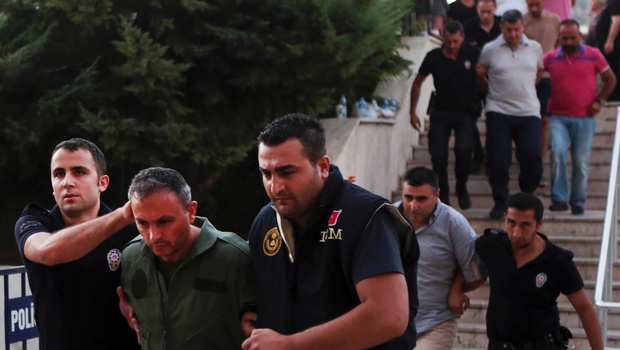
A section of Turkish armed forces declared Martial law by suspending constitution, by taking control on National Television, Ankara Airport, and two strategic bridges, by suspending media transmissions including social media, bombing parliament house and police headquarters at Ankara and killing 41 cops and parliamentarians, by showering bullets from the sky on public crowds killing total 260 people, by establishing controversial “Peace Council” and by strangely promising to defend and respect human rights. This brought great shockwaves for the well-functioning democratic system headed by popular Tayyip Erdogan, an elected president of Turkey. In this entire crisis, Turkish police have made a history by fighting for freedom and by impinging upon the forces of terror and tyranny, instead of being their part and parcel or silent spectator as has been in most of the cases.

On this wave of terror whole Turkish nation was in a severe state of dolefulness. Bombing and firing had unleashed the reign of terror all around. President Erdogan got a call on Emo from CNN correspondent who showed president Erdogan giving a message to his nation to come out of their home and protect freedom and democracy as local channels had been taken over by the mutineers and the local broadcasting had gone off the air. Social media which was long hated and rejected by Erdogan played a very constructive role in bringing public on roads to confront tanks. Besides this Prime Minister of Turkey also extensively used Twitter and kept on tweeting all updates which international media was broadcasting,  so communication kept going on. When this was declared that only a segment of military under 20 to 25 officers of mid ranks had gone for that misadventure and who had arrested Army Joint chief of staff at his home, the president as well as prime minister of turkey kept on communicating with international media as well as their own public through social networks of Twitter, Whatsapp, Emo, Facebook, and YouTube.

The message reached the people well in time and all political parties including opposition party stood for democracy and against the military takeover. Same was true for Public who rammed and echoed streets with the slogans “Narai Takbeer, Allah ho Akber and Labaik Allah Humma labaik”. There are few very important things about this coup that I want to share about the role the police played in defence of freedom and in the fight against terror and tyranny. Turkish police have made a history which is unprecedented anywhere in the world yet.

Normally people defend and die for freedom, so is the case of media who too always stand for freedom in telling truth but world’s history of police is quite silent and wordless regarding police playing the tunes of freedom of the people against the coercive authority of the tyrants and dictators. In most of the cases, police have been a brother and a partner of military forces in power and perks grabbing game whenever the military dictators have overthrown the elected regimes and have bulldozed the constitutional orders as we have been witnessing in our own national history, what to talk of far away stories.

Before going into the reasons to the redefinitions of the role of police as the guardians of freedom in addition to their defined role of the protectors of peace and order, let us see what important and special things have been witnessed in the crisis management and role of police in Turkey during military misadventure. Initially, prime minister and the president declared that a section of the army, not all armed forces had gone mad to bang the streets of Ankara and Istanbul with tanks and declare a curfew and ordered public and police to deal them with all force and subdue them. No doubt such order from high command was well taken by the police force and negotiated at many places with army officers to go back to the barracks.

Very rare indeed, Turkish National Police (TNP) succeeded in overpowering military soldiers with the active assistance of the public. Those contingents of the army who had bombed and who had attacked headquarters of Turkish Special Forces, killing 41 cops, were arrested by the police commandos of Turkish special police in a bid to protect their men and headquarter. Police officers staged a resistance against their armed forces which is a rare feat of bravery and professionalism. Normally in such situations, police hardly confront their armed forces but rather happily surrender to them and begin to back up and buck up them in their endeavour to deprive people of their freedoms.

Very important have been the handling of police with their public and public dealing with police, an example of a beautiful equation. Police and public did their best to remain nonviolent and engaging armed forces peacefully which they did despite the fact that the Martial, who were at the mercy of the strange megrims that spread into their head and heart, spared none from their vagary, violence, and vandalism. Public and police did not take the law into their hands to their utmost. They tried to convince them for going back peacefully but Martials tried to be terrific and terrible, leaving police and public with no option but to go stormy and undomesticated with them in many cases.

However, our police forces have always been used as an instrument of coercion both by the democratic and authoritarian regimes without impunity and ironically police forces in Pakistan have never shown their spin to stand by their public and their fundamental rights. Consequently, there has been a remarkable trust deficit between the public and the police. In addition to this, due to lack of reforms in reducing political interference and increasing militarization of policing models in which more reliance is on force model instead of service model have gone extra miles in incapacitating our police to serve and protect their communities and their fundamental freedoms. We need communitarian cops who live, grow and retire in serving their communities in a democratic way. In Pakistan now time is very ripe for sowing the seeds of policing concept: “police are public and public are police” as the founder of modern policing Robert Peel of England said and as the Turkish police demonstrated by defending fundamental freedoms of the people of Turkey by defying to death the march of tyranny on the roads of Ankara and Istanbul.

Coupe handling by Turkish police has made it clear that police are not to be misused against the public, as the source of actual power is public and police like all other civilian institutions use the authority of law as a trust on the behalf of the public and not on the behalf of state, a concept which is on its last legs in modern democracies. Serving people for their rights at the cost of everything, and not subjugating them for state obedience is the lesson one can learn from what Turkish police have done for their public and democratic order by upholding the rule of law and by laying great sacrifices, hence adding the new label of “Freedom Cops”.

WRITER IS SENIOR OFFICER FROM POLICE SERVICE OF PAKISTAN