
J. J. Baloch
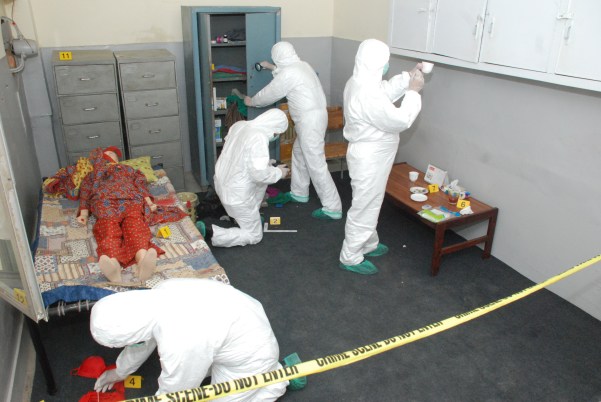
“All objects in the universe are unique. No two things that happen by chance ever happen in exactly the same way. No two things are ever constructed or manufactured in exactly the same way. No two things wear in exactly the same way. No two things ever break in exactly the same way“, so maintains Joe Nickel, a Forensic Expert. Such is the value of science in policing that makes the difference by understanding the difference of the signatures of everything whether it be a crime scene, the fingerprints, the tool marks, the foot tracks, the writings, the ballistics, the biometrics, digits, or anything that help understand crime and criminality. Application of science to the law is called forensic. To me, forensic is the soul of science in policing.
The value of science in policing implies smartness in law enforcement, cost-effectiveness for policing, authenticity and reliability in criminal investigations and to great extent the least political interferences in police work. Policing is defined as a “science of peace and order”. Any scientific methods employed to achieve the goal of peace and order by the police can determine the appropriate value of science in modern day society. “We believe that a radical reformation of the role of science in policing will be necessary if policing is to become an arena of evidence-based policies. We also think that the advancement of science in policing is essential if police are to retain public support and legitimacy, cope with recessionary budget reductions, and if the policing industry is to alleviate the problems that have become a part of the policing task”( David Weisburd and Peter Neyroud: 2011).
Criminologists, sociologists, psychologists, pedagogues, philosophers and academics from different fields of science have produced a great number of scientific reports on surveys and projects concerning practical and theoretical topics of police, policing and police training after World War II. They had some direct or indirect influence on political (economic, legal, organisational) decisions and the development of conditions for policing and police training in some countries or regions… It was only possible to bridge the gap between theory (science, academic research) and police practice in some countries and in some fields of police/policing.
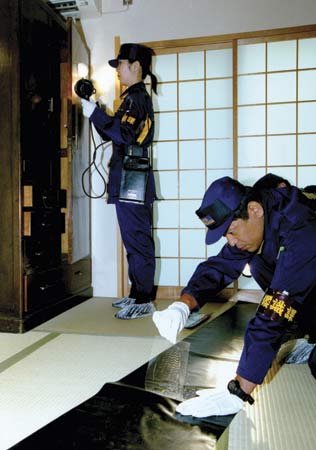
Police departments in Pakistan, as in elsewhere in the world, face a growing number of fiscal challenges. These challenges include many but the most recurrent being balancing the need to combat crime with the cost of policing. Apparently, the volume of budgets increase but such increases are accompanied with limits on the discretionary powers and powers to make the decision about the scientific innovations in policing. The number of police force keeps on increasing without their substantial capacity. Therefore, the policing situation in Pakistan warrants very constructive scientific and technological interventions.
There are many examples of police departments worldwide that have attached prime importance to the application of science to policing practices and have received remarkable outcomes in reducing crime and violence within their areas of responsibility. Among them, the names of Boston, Philadelphia, New York, Chicago, California, London, Tokyo, and many other mega-cities are always referred by the policing experts. The police departments in Pakistan such as Karachi, Lahore and Islamabad are struggling with scientific ways and have recently experienced great success in terms of controlling crimes of different types including terrorist incidents.
Why Think of Science in Policing
Increases in funds for building structures, criminal database, forensic facility, digitalization of police investigation and operations, and improving public service delivery are the areas where our governments need to invest for better convictions and equipment to deal with violent acts and mobs. Decreases in funding for public safety mean those police departments cannot support an ever-increasing number of law enforcement officers — or, in many cases, even the status quo. Therefore, police officials must shift their attention to the science of controlling crime and disorder. In his seminal work on the topic, criminologist Lawrence Sherman is of the view that such evidence-based model driving its authenticity from science could serve as the “most powerful force for change in policing” and also an instrument of policing the changes in crime industry.
Sherman further observes: “The use of the best available research on the outcomes of police work to implement guidelines and evaluate agencies, units and officers.” Evaluation of ongoing police operations is important because it can link research-based strategies to improved public safety outcomes, allowing police agencies to move beyond a reactive, response-driven approach and get smarter about crime control. Science can equip our police departments in Pakistan to adopt innovations in policing ranging from intelligence-led policing to predictive, evidence-based, and proactive policing approaches focussing on crime prevention more than on punishment.
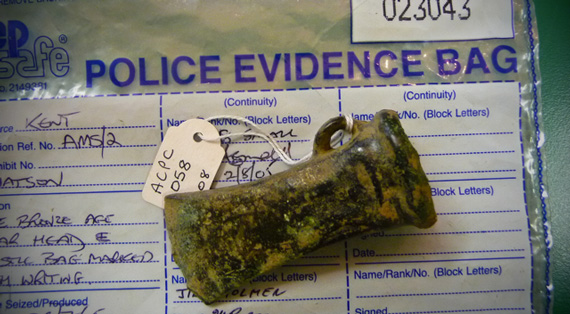
The Disconnect Between Researchers and Police Departments
One factor that contributes to the lack of agreement about how to design policing strategies is the disconnect between the evidence researchers uncover and the approaches taken by many police departments. This disconnect has varied causes, and it leads many practitioners and policymakers to view science as “a luxury that can be useful but can also be done without.” Conducting social science research is time-consuming, which runs counter to community demands for a quick response and to political realities facing police chiefs. And sometimes, even after months or years of study, researchers simply do not know why certain crime phenomena occur and their call for the further inquiry is common.
Who Should do What?
However, incomplete answers about the crime should not keep police departments from using the best available science to inform their strategies. Home departments and police chiefs (IGPs) should embrace the potential of science and introduce it to the toolbox their police officers use to solve crime problems.
If the onus for adopting scientific approaches to controlling crime is on the police, the responsibility for disseminating scientific police practices as well as processes rests with the research community while the politicians are to provide funds to support research-based policy guidelines for policing. Governments through their provincial and federal home or interior department should envisage an establishment of research institutes for criminal justice research which should feed Pakistan’s criminal justice policy, setting goals of crime reduction and improving public safety standards.
Connecting Science to Crime Control Strategies
Researchers can fulfil this responsibility by producing timely, readable reports of their work. Most researchers author lengthy technical reports full of scientific jargon, more suited for academics than practitioners and policymakers. If they want practitioners to use their findings, they must make their research easier to understand. John Laub, Director of the National Institute of Justice, said, “If we want to prevent, reduce and manage crime, scientific discoveries must be translated into policy and practice.” If every crime control research effort resulted in a short, readable and accessible summary that was effectively marketed, perhaps local leaders would start to demand that police pursue policing Science. Each summary could outline the issue studied, the method used in the study, the study’s findings, and their application to policing and crime control.
Inherent in connecting science to the development and evaluation of crime control strategies is the understanding that local knowledge and experience counts and must be blended with scientific evidence to create operationally — and politically — realistic strategies. Police and community members’ knowledge of local conditions, expectations and social dynamics that contribute to crime and disorder are important and should not be ignored.
Adoption of Science in policing does not replace community-specific knowledge, and it does not remove a police department’s authority or responsibility for crime control decisions. It is intended to inform decision-makers about the best scientific evidence regarding strategies to realize desired outcomes. This evidence helps them create or refine their approaches and provides structure for evaluating their efforts. It cannot and is not intended to replace the wisdom and judgment of policing officials and those to whom they report.
Police departments in Pakistan can increase institutional as well as practical knowledge about the science of crime control by forming partnerships with local universities or colleges to use the services of professors, graduate students or interns. National Police Bureau of Pakistan should hire a Ph.D.-level criminologist to translate existing research findings, help craft new scientific research-based strategies and evaluate existing ones. In addition to this, the government of Pakistan can utilize the services of those officers from the Police Services of Pakistan who have completed their foreign education, especially those who have done PhDs abroad.
A shift of the “ownership” of the science of crime control from academic institutions to police agencies may be needed to implement science in policing. Facilitating this shift, those who appoint and remove police chiefs of provinces or districts— Federal and provincial governments — can change the reward systems for police chiefs to encourage them to pursue science-based police practices. As a consequence, “police departments will, as Sherman advocates, become more conversant with the science of crime control and increasingly use the “best evidence to shape the best practices.”
Resistance to Science by the Police Culture in Pakistan
Policing in Pakistan still, coexists with conventional ways and has witnessed mismanaged, slow, disconnected and indifferent-to-ground-reality reforms that have been witnessing many fluctuations due to the absence of uniform institutional approaches. In all police agencies working in Pakistan, there is a growing consensus on the effectiveness of using scientific methods in preventing and solving crimes, but the interest of stakeholders in peace and order varies from one department to the other. If Khyber Pakhtoonkha government allows reasonable independence to Provincial Police Officer (PPO) KP for taking better decisions based on ground reality, the Punjab government is still revisiting tighter bureaucratic controls and Sindh government tries hard to ensure political controls on Sindh police through their home department; while in the GB and Balochistan the police functions are performed by non-police or military agencies. All those in Pakistan who want to control police through different means never want police to be capable of doing their work, autonomous to rely on their own, and independent to remain impartial in decision making. And the application of science to policing is destined to enhance police capacity that many vested interest groups resist; Adoption of science in policing could ensure across-the-board accountability that the thana culture in Pakistan always resists!
Closing Remarks
Adopting a community-oriented problem-solving philosophy and to use the best available scientific evidence to drive crime control strategies, policymakers and taxpayers alike can help law enforcement officers make our cities safer. They can also help law enforcement officers become more responsive to all the communities they serve, increase their legitimacy with their communities. Application of science in policing increases transparency in police procedures, that in turn warrant for more accountability and hence better professionalism in police which is, indeed, a dire need of the hour. Thus, policing, which is devoid of science, is nothing more than merely a watchman-ship.
The Writer is a scholar, an educator, a novelist and a senior officer at Police Service of Pakistan…

 Vision-Vista of JJ Baloch
👌👍
LikeLike
nice work jj baloch
LikeLike